
The Holy Infants Embracing — History & Facts
No signed or securely documented painting by Leonardo da Vinci titled The Holy Infants Embracing survives, yet this lost or disputed work has haunted art historians for centuries. The subject—an intimate embrace between the infant Christ and his cousin John the Baptist—was described in early inventories and letters, sparking debate over whether Leonardo ever completed such a composition. Some believe a preparatory drawing in the Royal Collection at Windsor, showing two infants entwined, hints at this vanished masterpiece.
Others point to later copies and adaptations, most notably by Marco d’Oggiono, as evidence that Leonardo’s vision once existed, if only in sketches or workshop versions. The scene captures a tender, imagined moment from the apocryphal childhoods of Jesus and John, when the two holy boys meet and embrace, foreshadowing their future roles. In the composition attributed to Leonardo, the Christ Child gently wraps his arms around John, whose reed cross signals his destiny as the forerunner. Their faces are pressed close, eyes meeting in a mix of innocence and knowing.
The landscape behind them opens to a soft, atmospheric distance—a hallmark of Leonardo’s sfumato technique—while the careful modeling of flesh and gesture conveys both physical warmth and spiritual connection. Unlike Raphael’s more formal Madonna of the Meadow, Leonardo’s infants are caught in spontaneous affection, emphasizing humanity over iconography. The fate of The Holy Infants Embracing remains uncertain. No securely attributed panel or canvas has emerged, and the original medium is unknown; what survives are copies, workshop variants, and tantalizing references in early sources.
The subject, however, became popular among Leonardo’s followers in Milan, shaping a whole genre of devotional painting in the late 15th and early 16th centuries. Today, scholars continue to debate the boundaries between Leonardo’s own hand and those of his pupils, and the lost composition’s influence lingers in museums from London to Madrid. The painting’s elusive history is a reminder of how much of Leonardo’s legacy is woven from both presence and absence.
More Artworks by Leonardo da Vinci

Sheet of Studies
Leonardo da Vinci
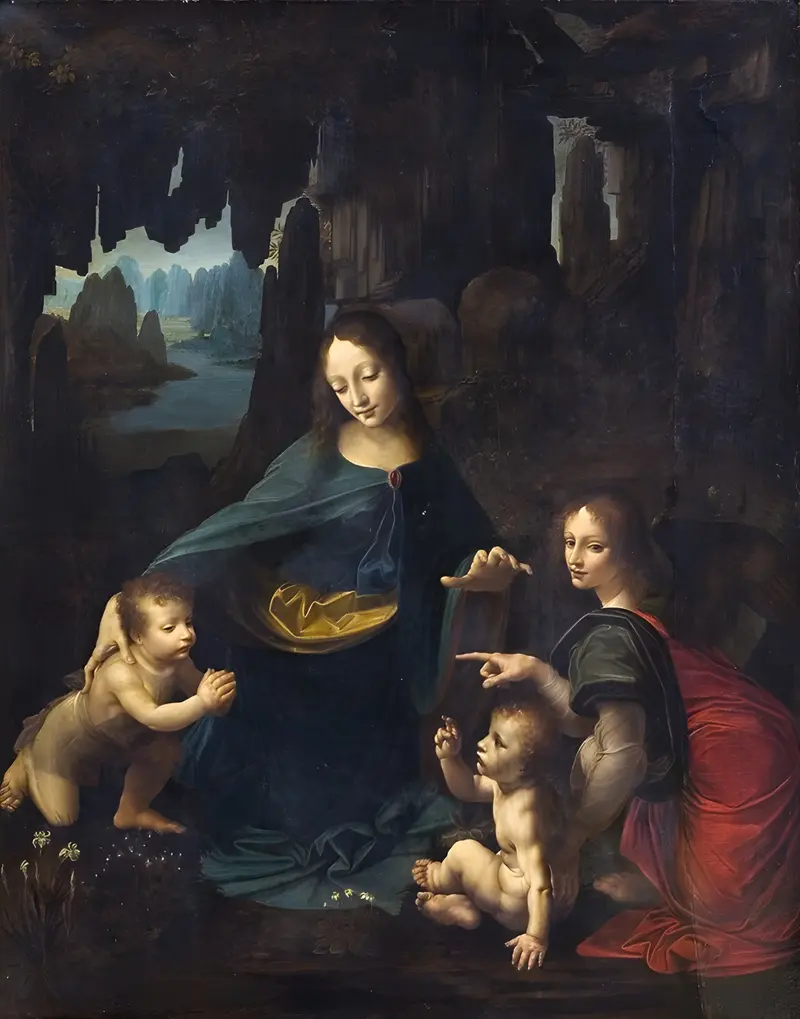
The Virgin of the Rocks
Leonardo da Vinci
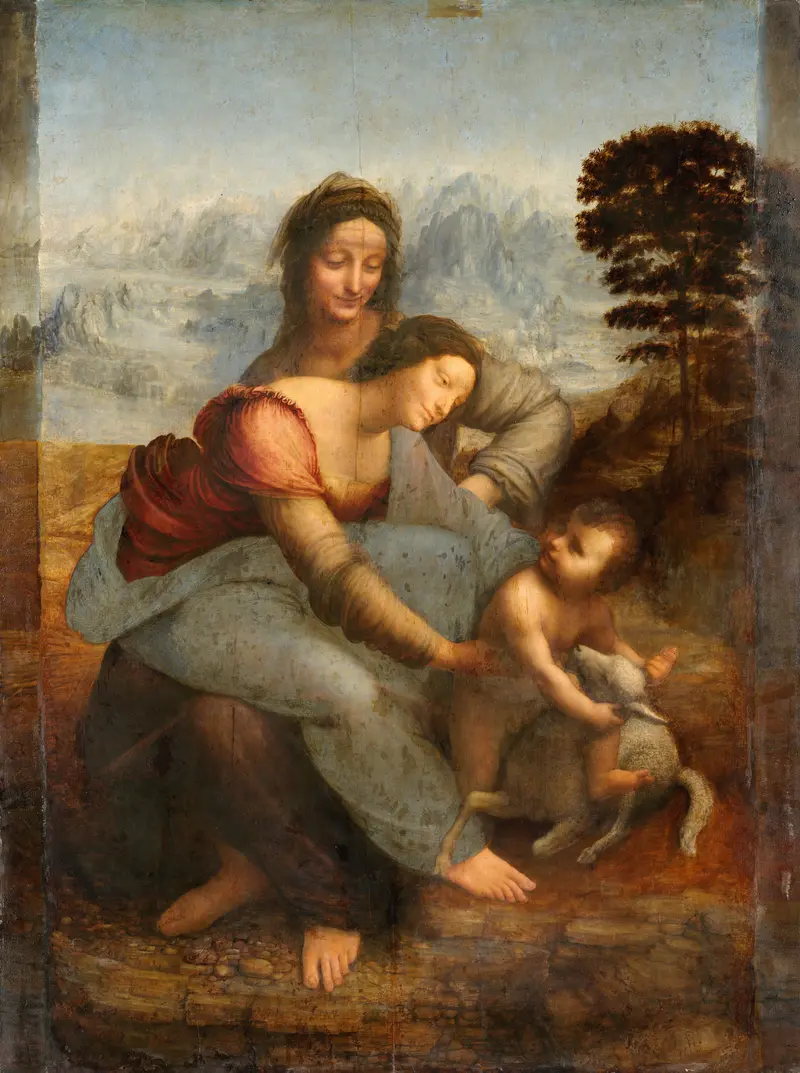
The Virgin and Child with St. Anne
Leonardo da Vinci
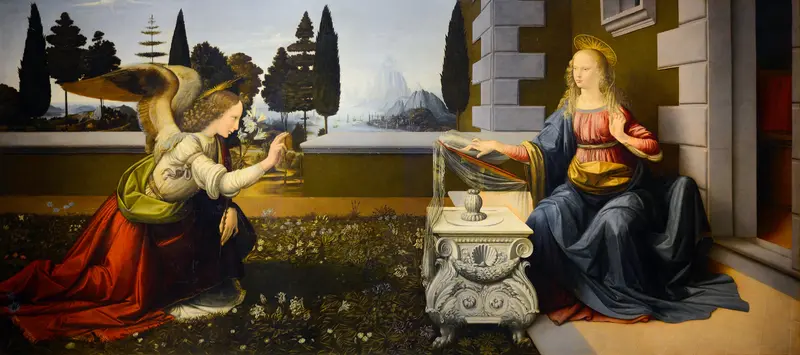
Annunciation
Leonardo da Vinci
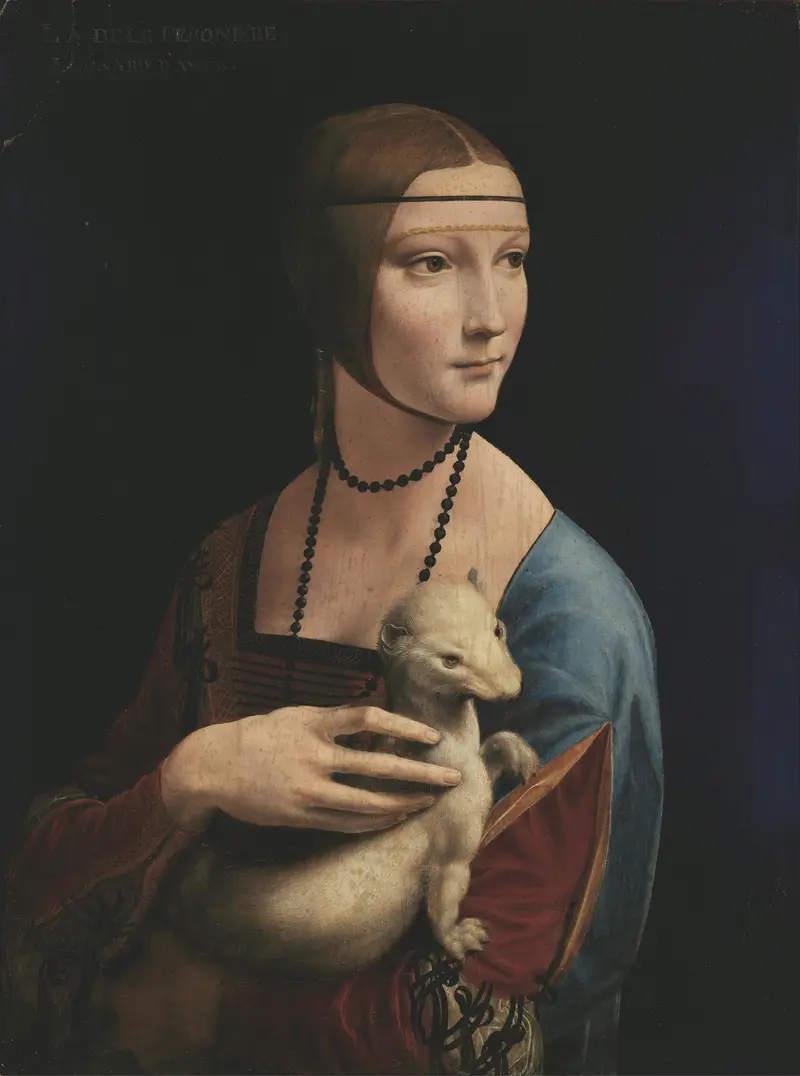
Lady with an Ermine
Leonardo da Vinci
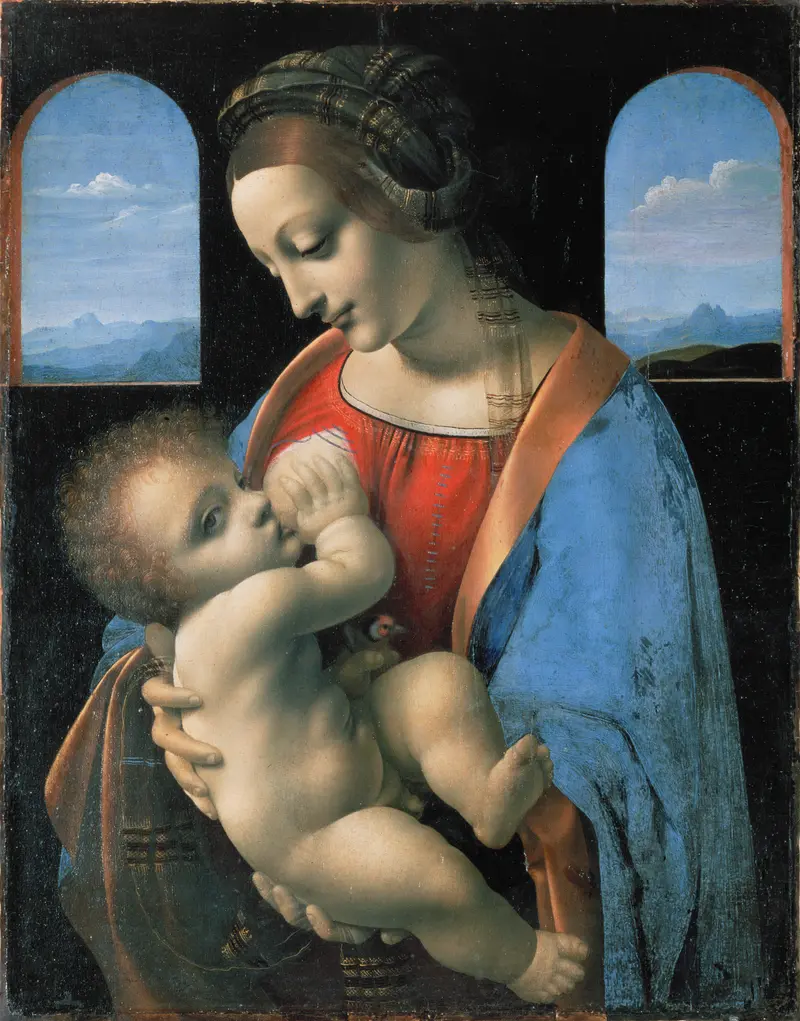
Madonna Litta
Leonardo da Vinci
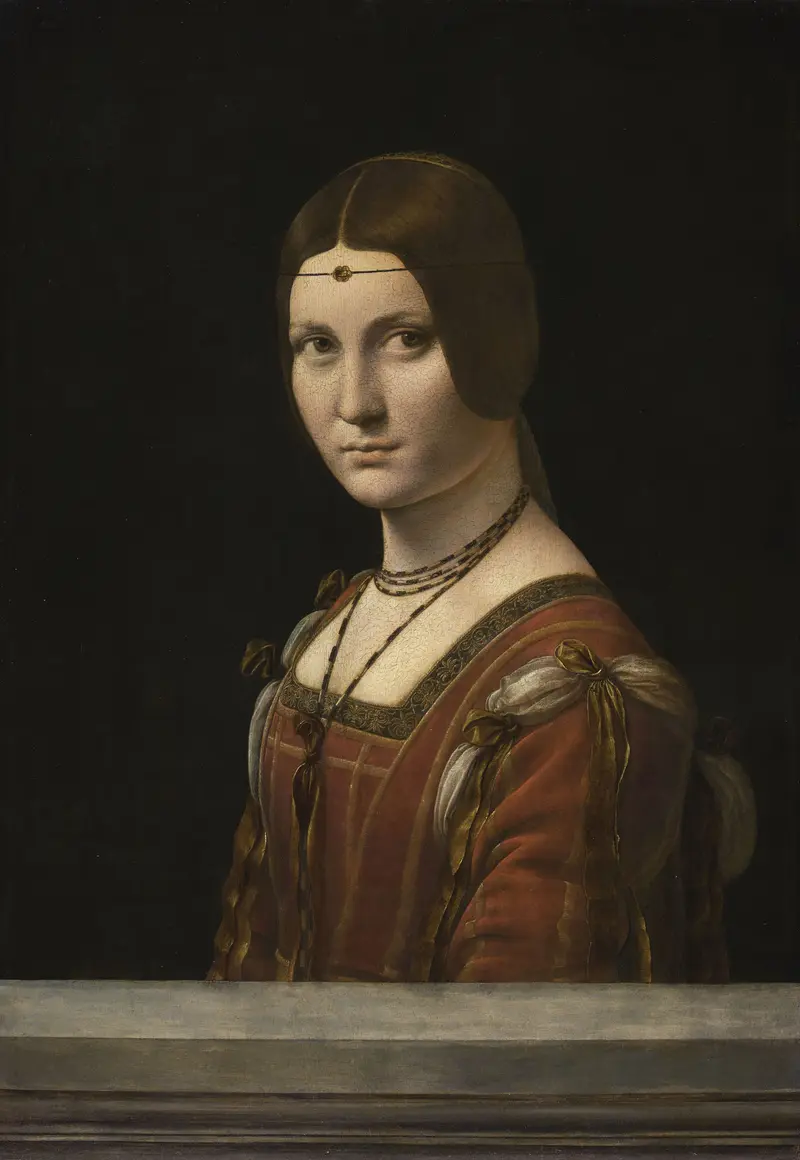
La Belle Ferronnière
Leonardo da Vinci
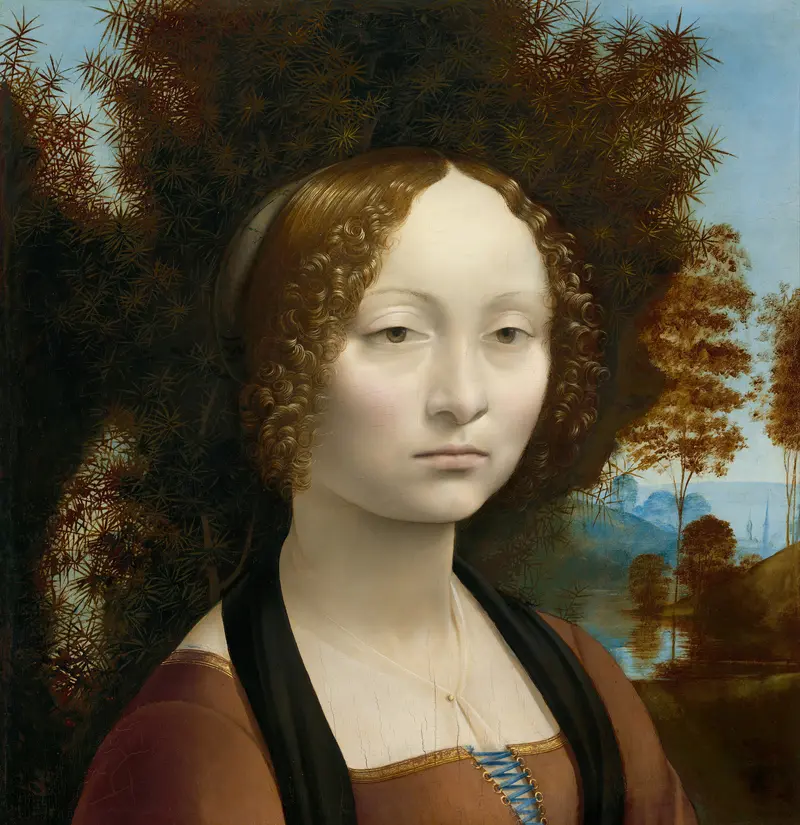
Ginevra de' Benci
Leonardo da Vinci
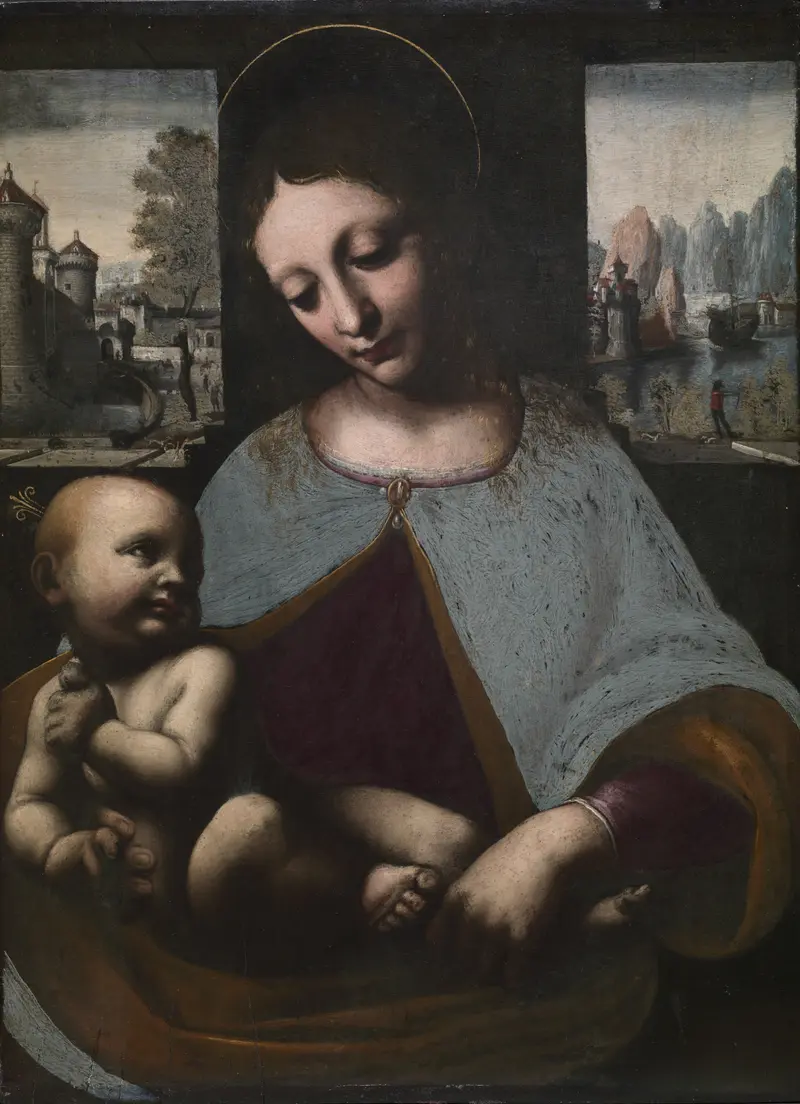
Virgin and Child
Leonardo da Vinci

Head of an Old Man, and Studies of Machinery
Leonardo da Vinci





