
Three Graces — History & Facts
No one can say with certainty what medium Raphael used for his Three Graces, nor even whether it is a finished painting or a highly polished study. This small panel, created around 1500, has long puzzled scholars: is it a youthful experiment or a fragment of a lost larger work? Its provenance before the 17th century is unclear, and it has sparked lively debate about whether it was inspired by a now-lost antique sculpture or by Perugino’s own version of the same theme. The painting’s intimacy and ambiguity have made it a touchstone for discussions about Raphael’s early development. The three young women stand in a tight circle, their bodies delicately intertwined, each holding a golden apple—a direct allusion to the myth of the Judgment of Paris.
In the story, Paris, prince of Troy, is asked to choose the fairest among the goddesses, awarding the apple to Aphrodite and thus setting the Trojan War in motion. Raphael captures the Graces at a moment of serene unity, their arms draped over each other’s shoulders, their gazes gentle and inward. The apples, symbols of beauty and discord, are passed between them, while their translucent drapery and soft modeling recall classical sculpture.
Unlike Botticelli’s more elaborate Primavera, Raphael pares the scene to its essentials, focusing on harmony and intimacy rather than spectacle. The early history of this panel remains shadowy, but it is generally accepted as one of Raphael’s earliest independent works, painted while he was still under the influence of Perugino in Umbria. It later entered the collection of the Duke of Orleans in the 18th century and eventually found its way to the Musée Condé in Chantilly, where it hangs today. The painting’s uncertain attribution in earlier centuries—sometimes given to Perugino or even Leonardo—reflects its transitional style and the young artist’s search for his own voice.
Today, it stands as a testament to Raphael’s early fascination with classical ideals and his gift for distilling myth into a scene of quiet, human grace.
More Artworks by Raphael

Madonna of the Goldfinch
Raphael

Madonna with the Fish
Raphael
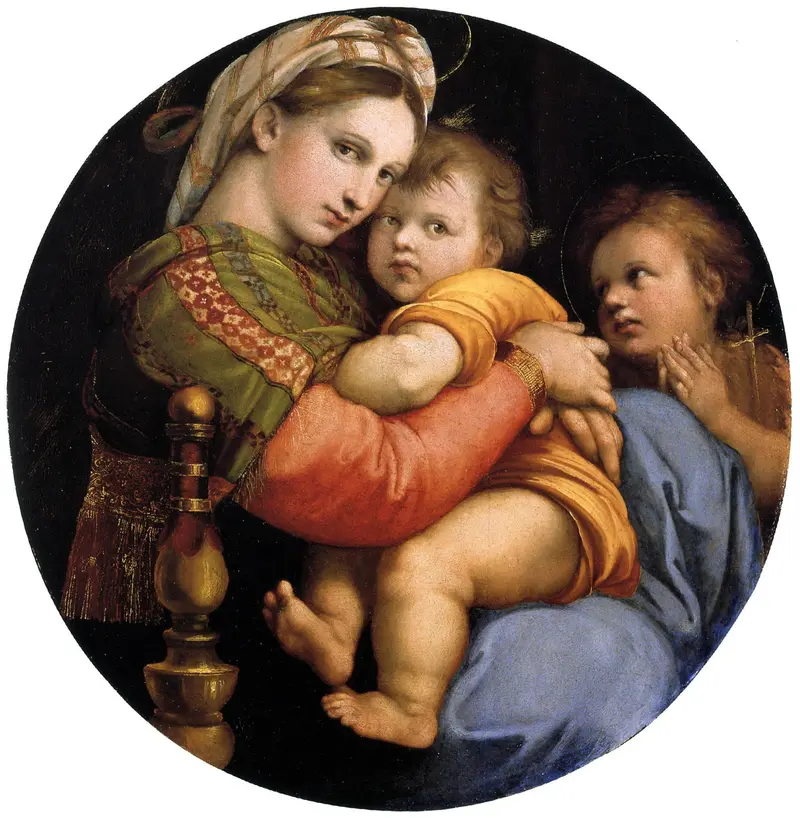
Madonna and Child (Madonna della Seggiola)
Raphael
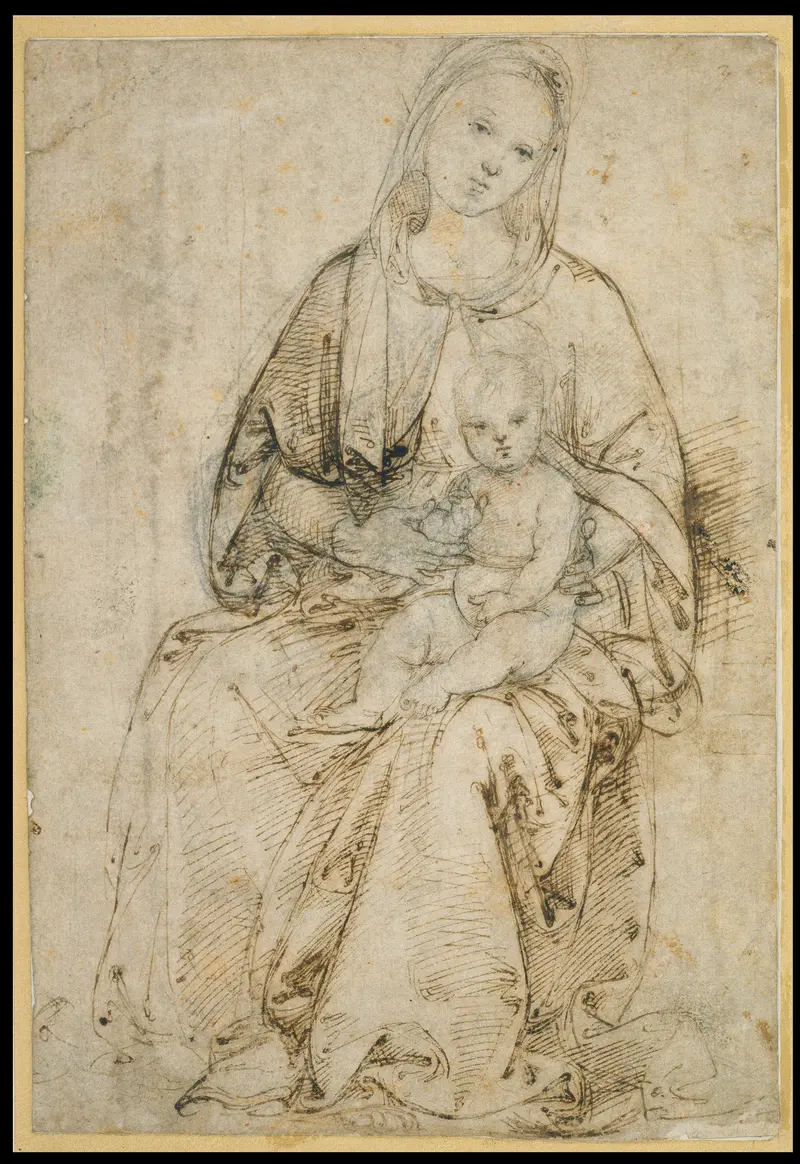
Seated Madonna and Child
Raphael
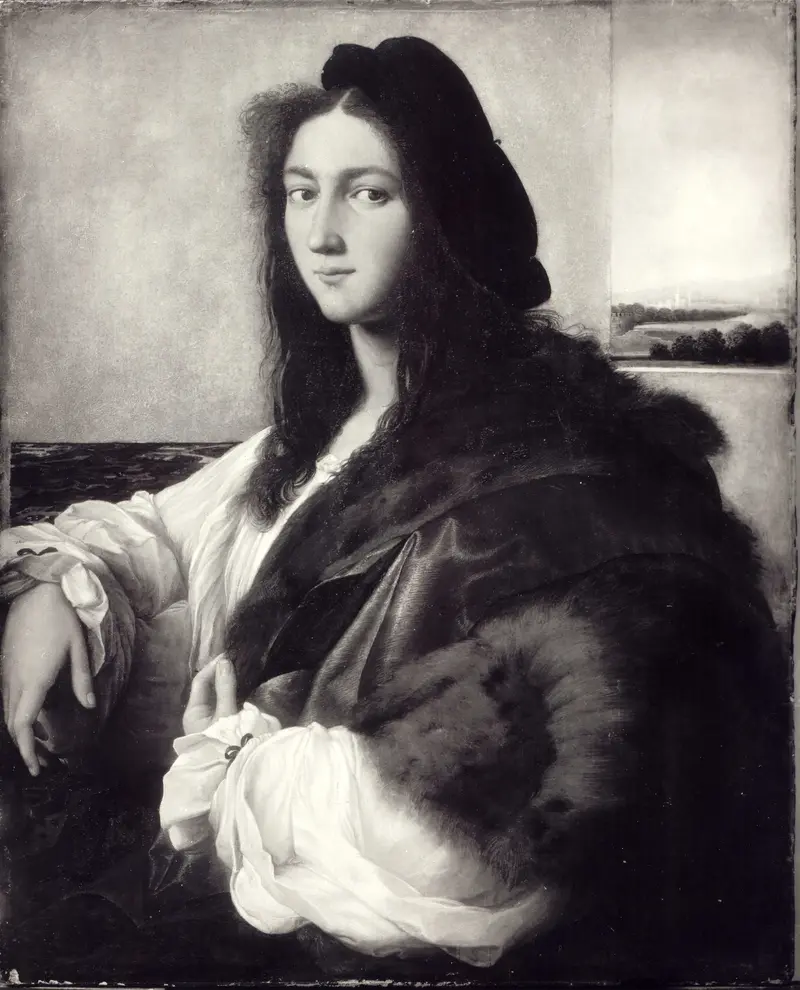
Portrait of a Young Man
Raphael
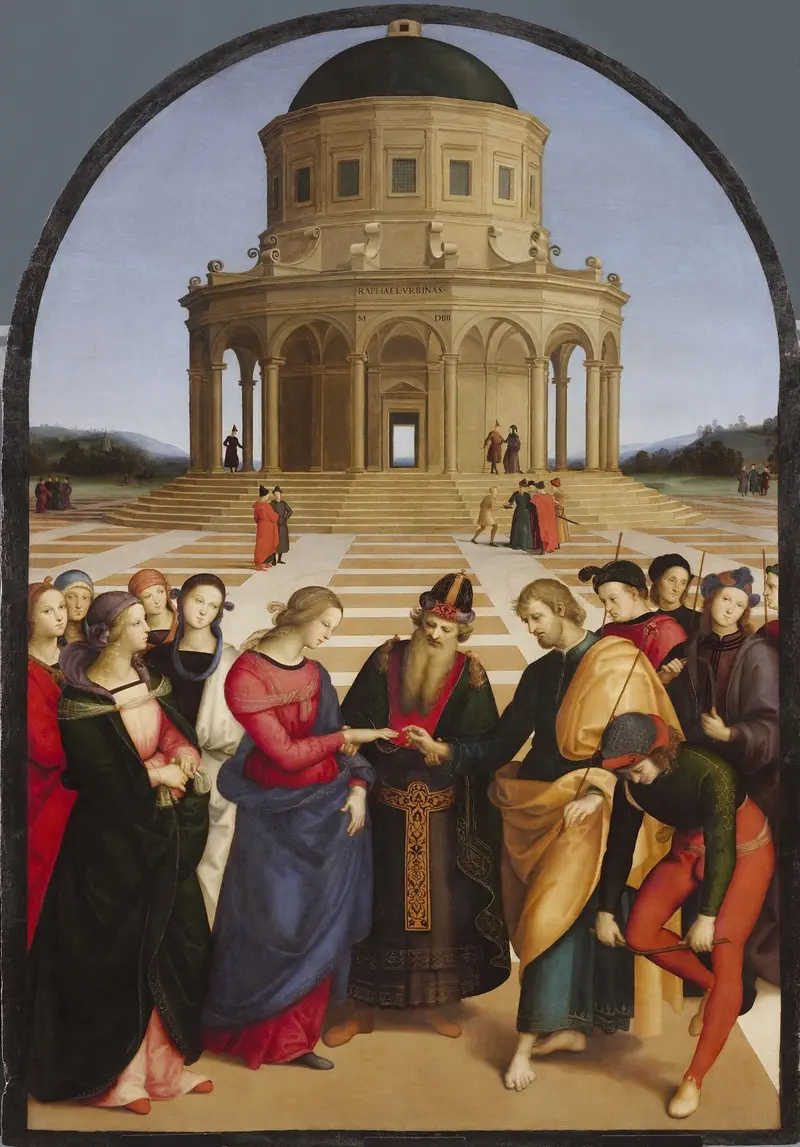
The Marriage of the Virgin
Raphael
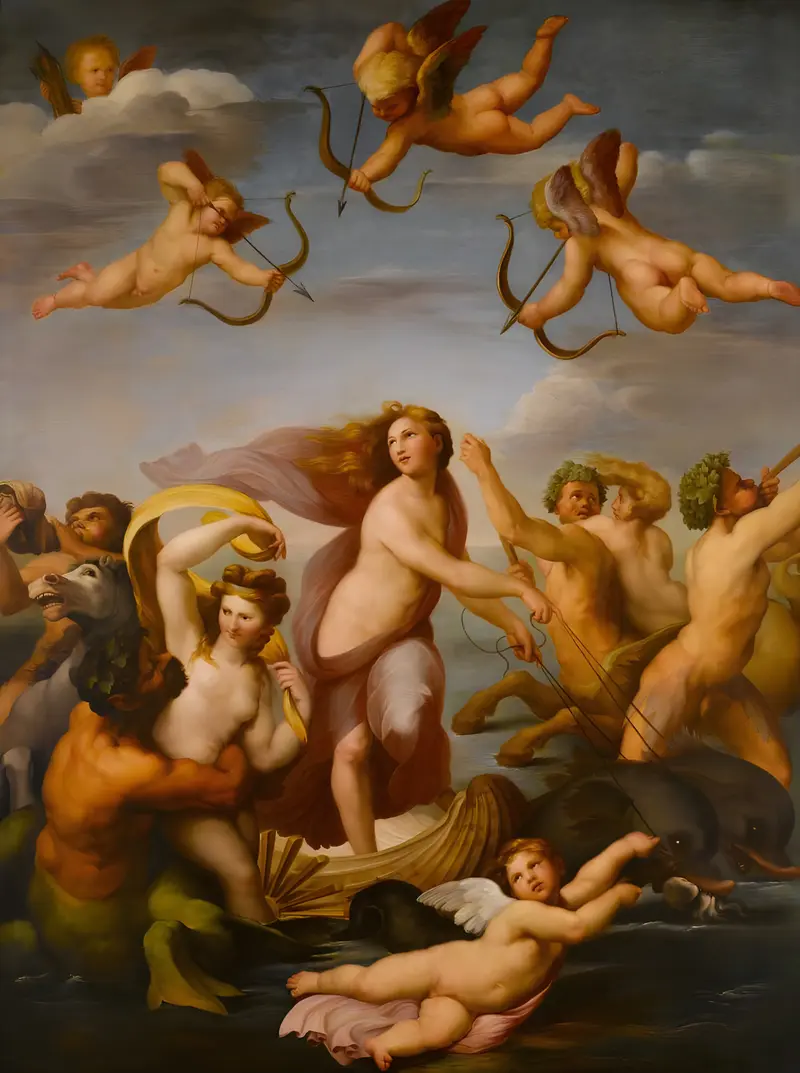
The Triumph of Galatea (copy after Raphael)
Raphael
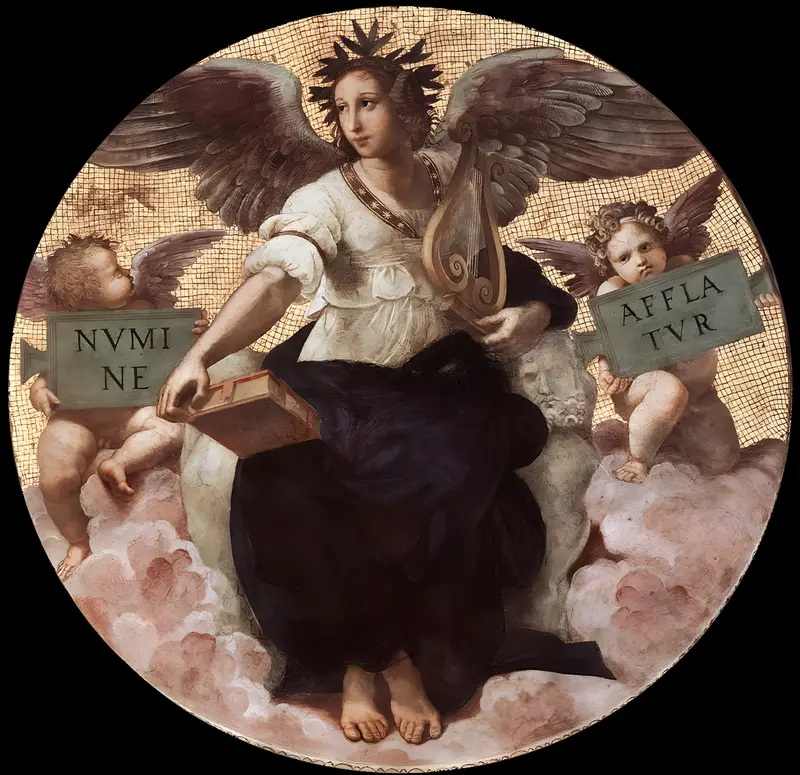
Poetry
Raphael
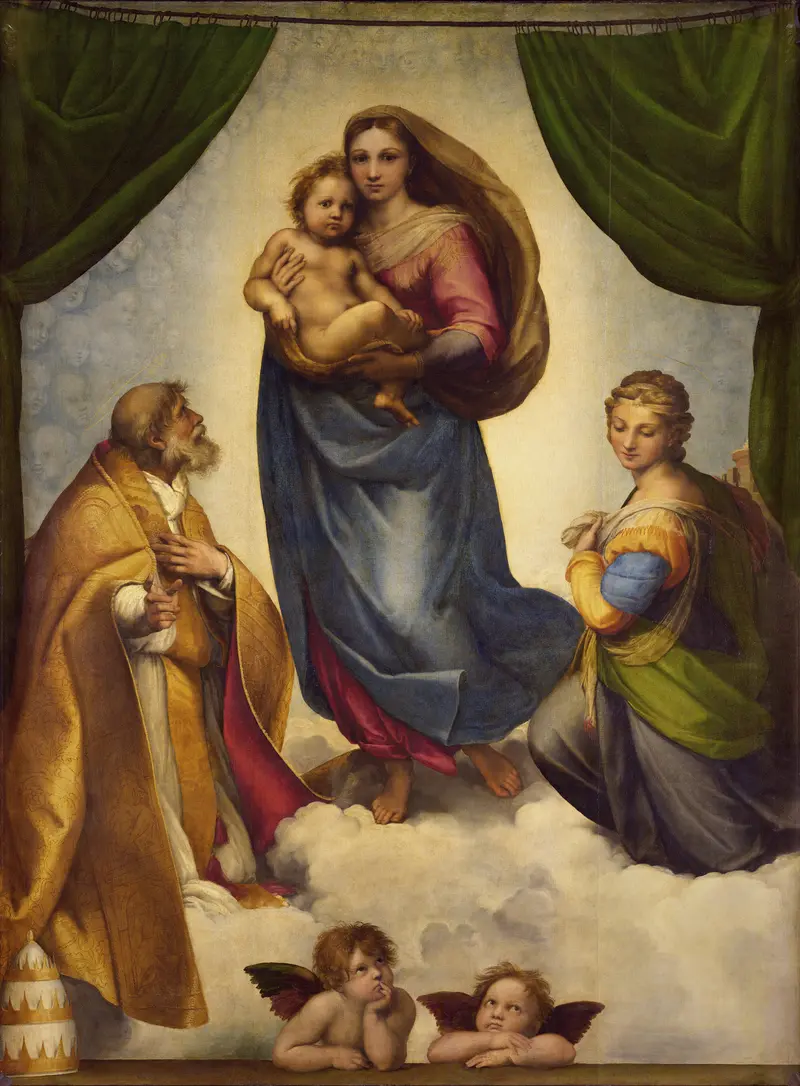
Sistine Madonna
Raphael
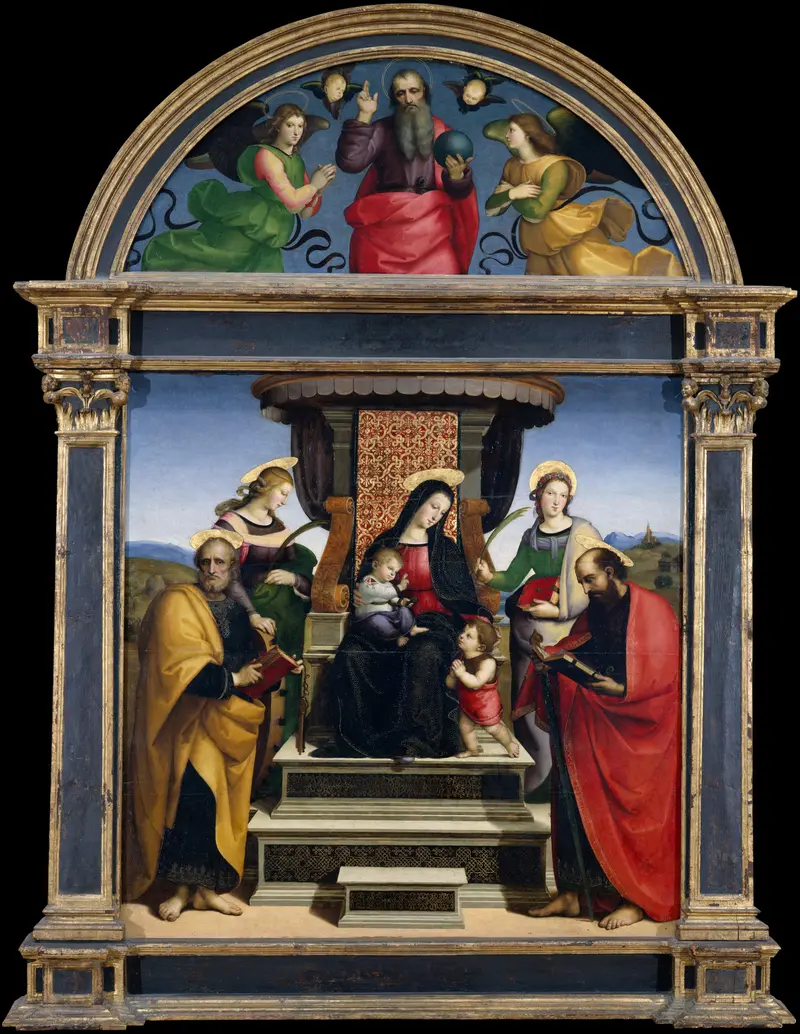
Madonna and Child Enthroned with Saints
Raphael





