
Art style · 16th–18th century · Northern India
Mughal Art and Paintings
Mughal painting is a style of Indian painting made for the Mughal emperors and their courts in northern India from the mid-1500s into the 1700s: finely detailed miniatures for illustrated books and albums that blend Persian, Indian and European elements. It took shape under Akbar (reigned 1556–1605), flourished under Jahangir (1605–27) and reached a pinnacle of refinement under Shah Jahan (1628–58). Its painters include Daswanth, Basawan, Mansur, Abu’l Hasan, Govardhan and Payag.
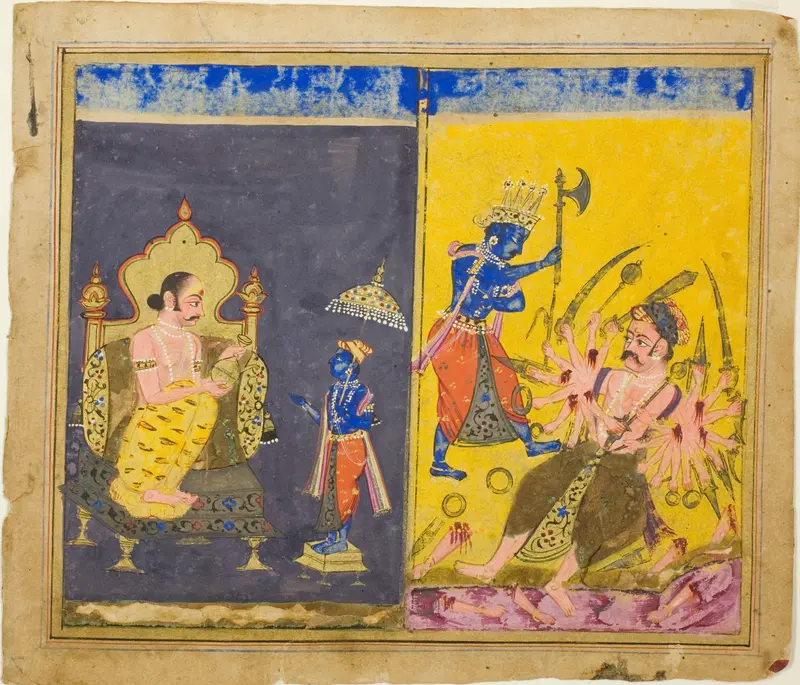
Akbar's first great project, the Hamzanama, took about fifteen years from around 1562 and had some 1,400 large paintings on cotton, directed by two Iranian masters his father had brought to India; about 200 survive, among them Umar Defeats a Dragon. Later emperors preferred portraits, allegories and studies of animals and flowers, mounted in albums with decorated borders, such as Govardhan's Akbar with Lion and Calf.
Browse 98 Mughal paintings and artworks below, all public domain and free to download.
Selected and written by Pavel MazuelasUpdated November 5, 2026
Part of Art Movements and Painting StylesRelated: Islamic Art, Indian Painting, Famous Portrait Paintings
All Mughal paintings and artworks
Court histories, portraits, album pages and animal studies of the Mughal era, with Rajput paintings and European views of India. All public domain, free to download.








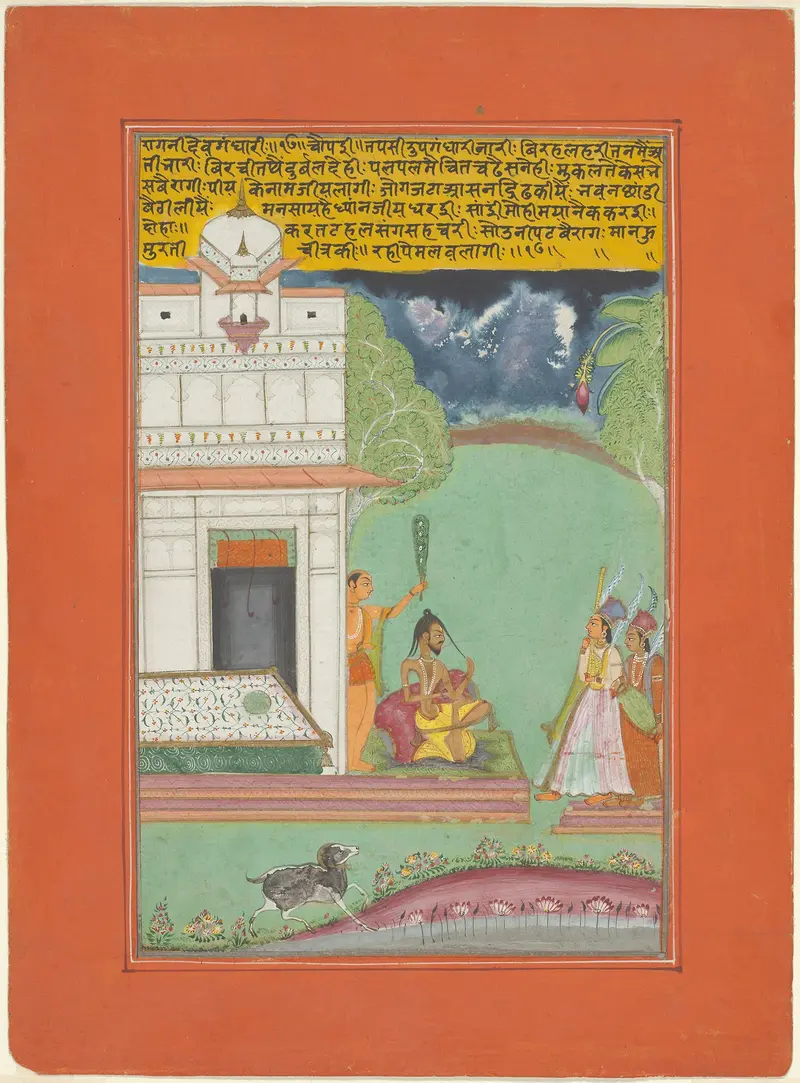
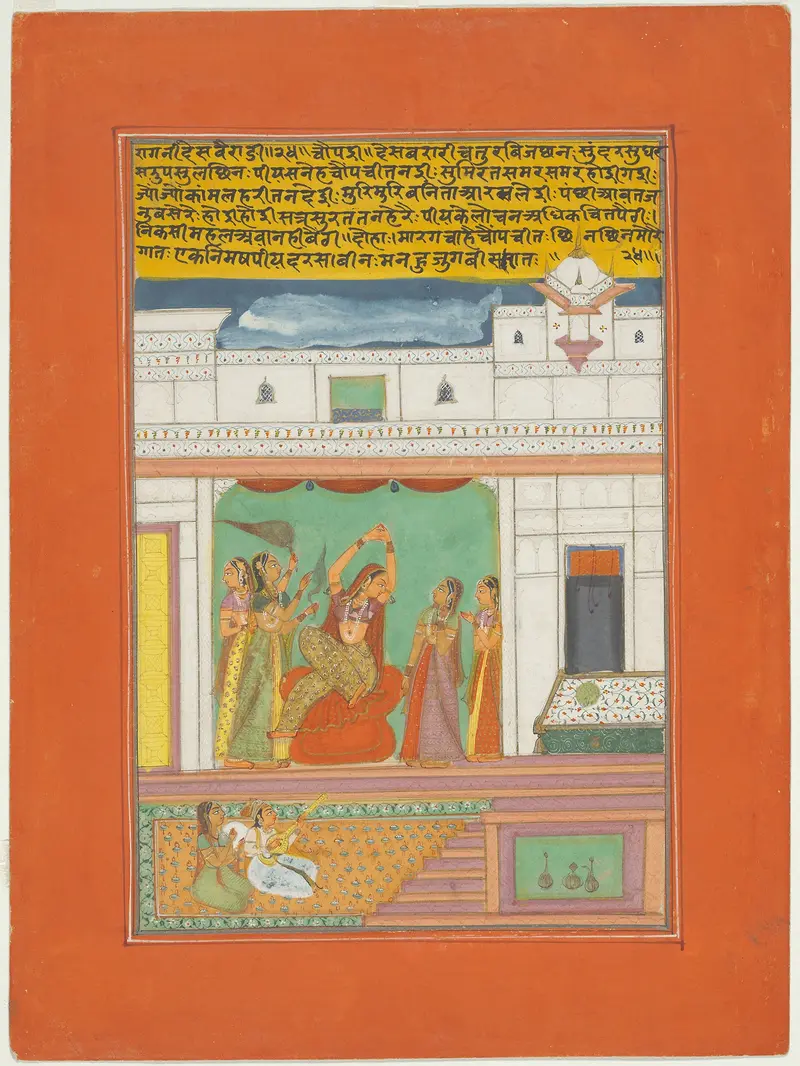
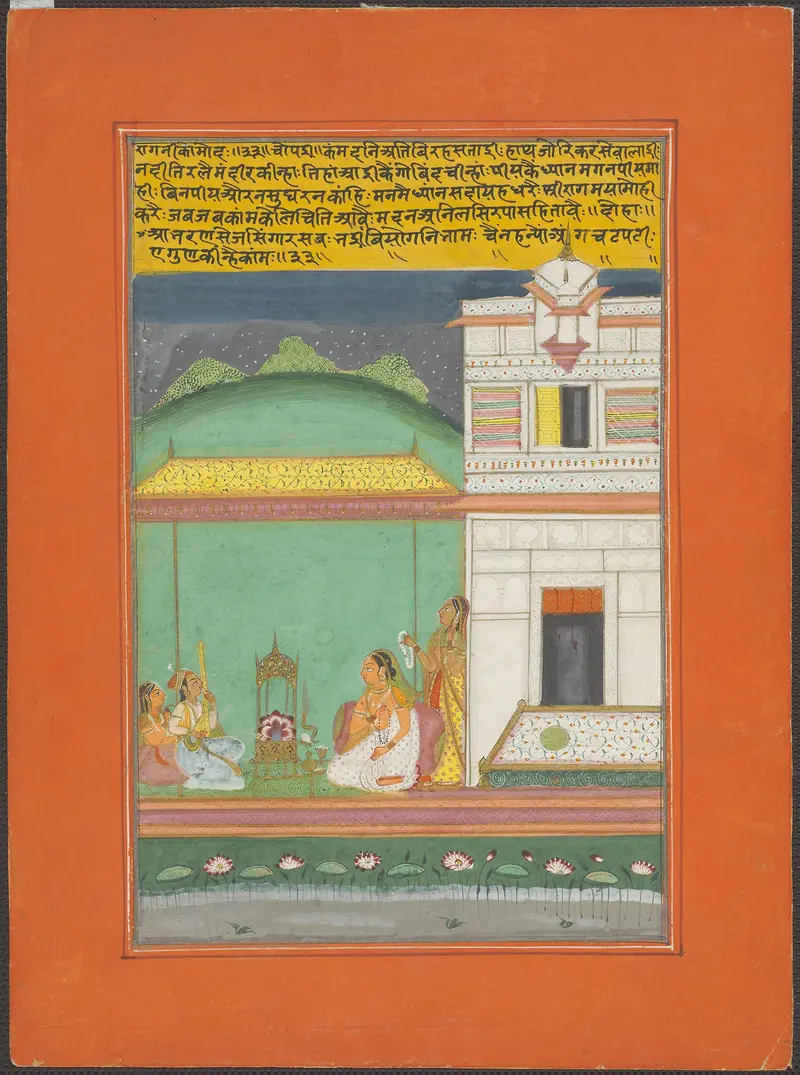

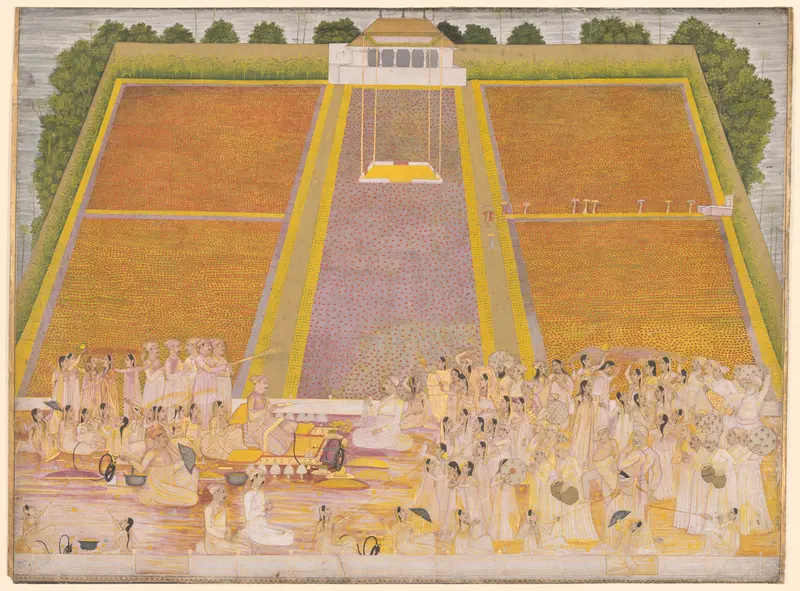
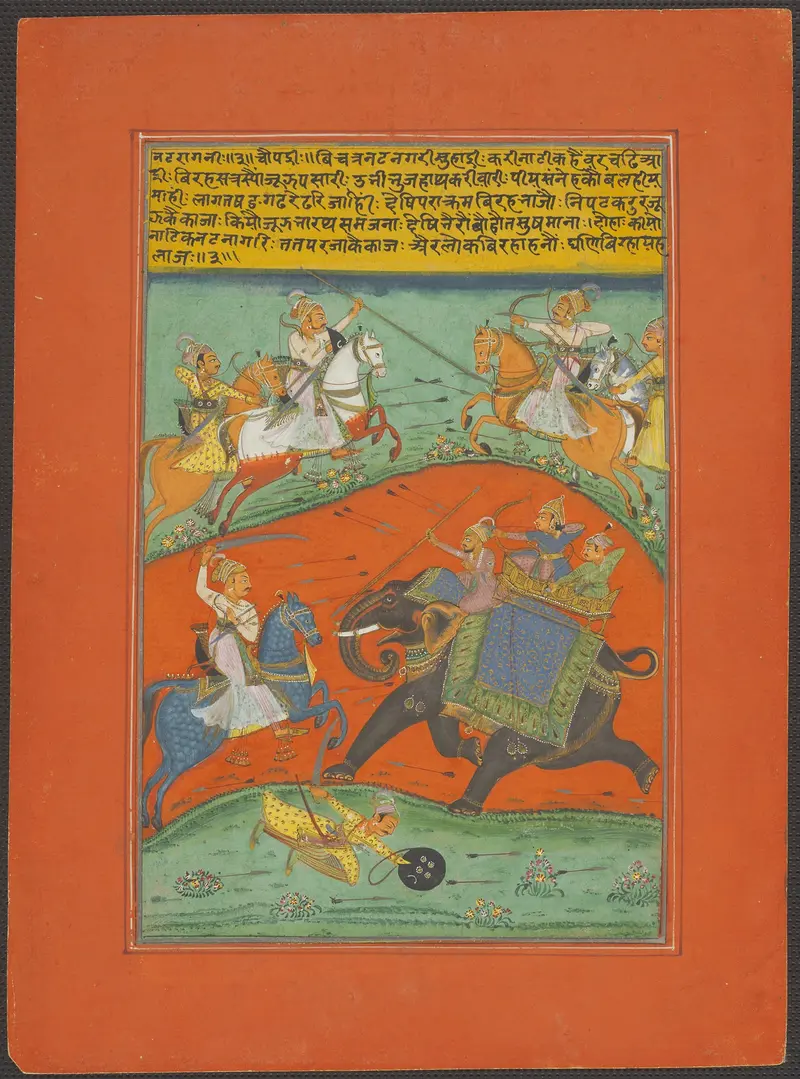
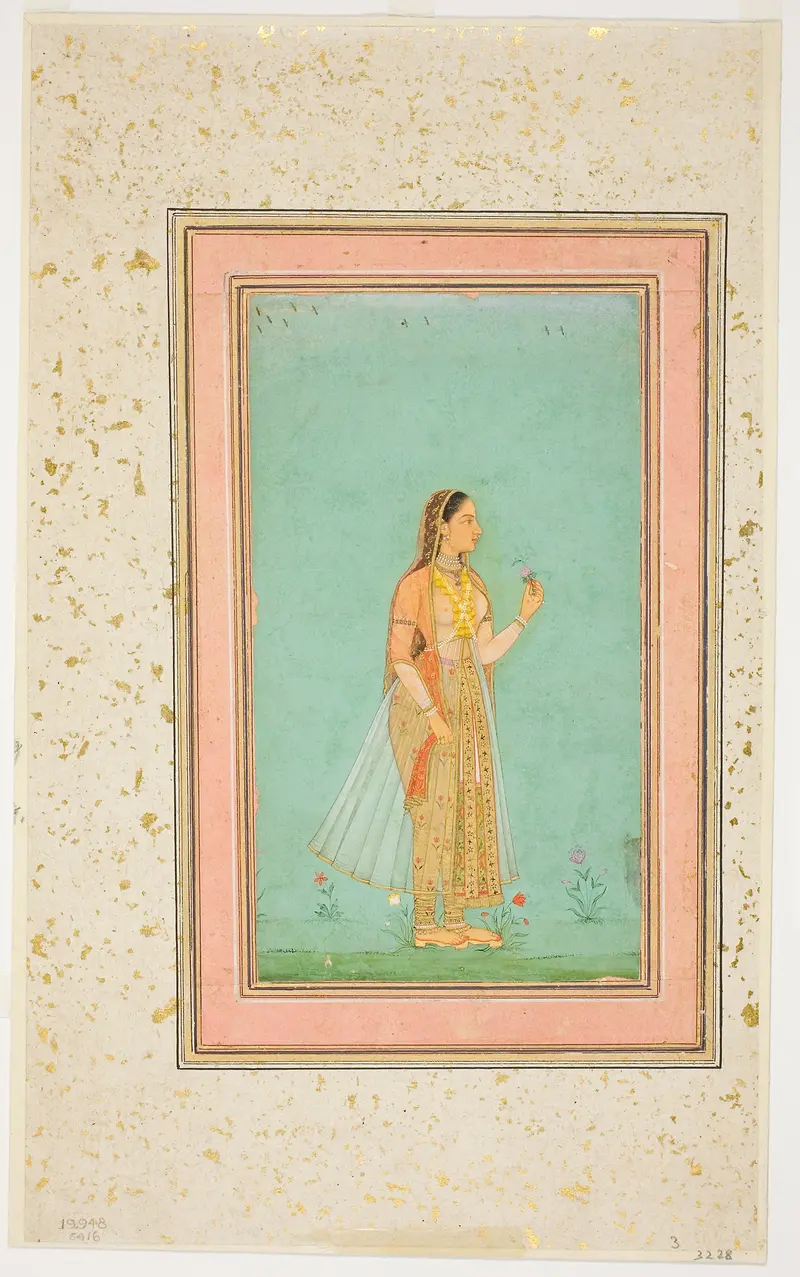
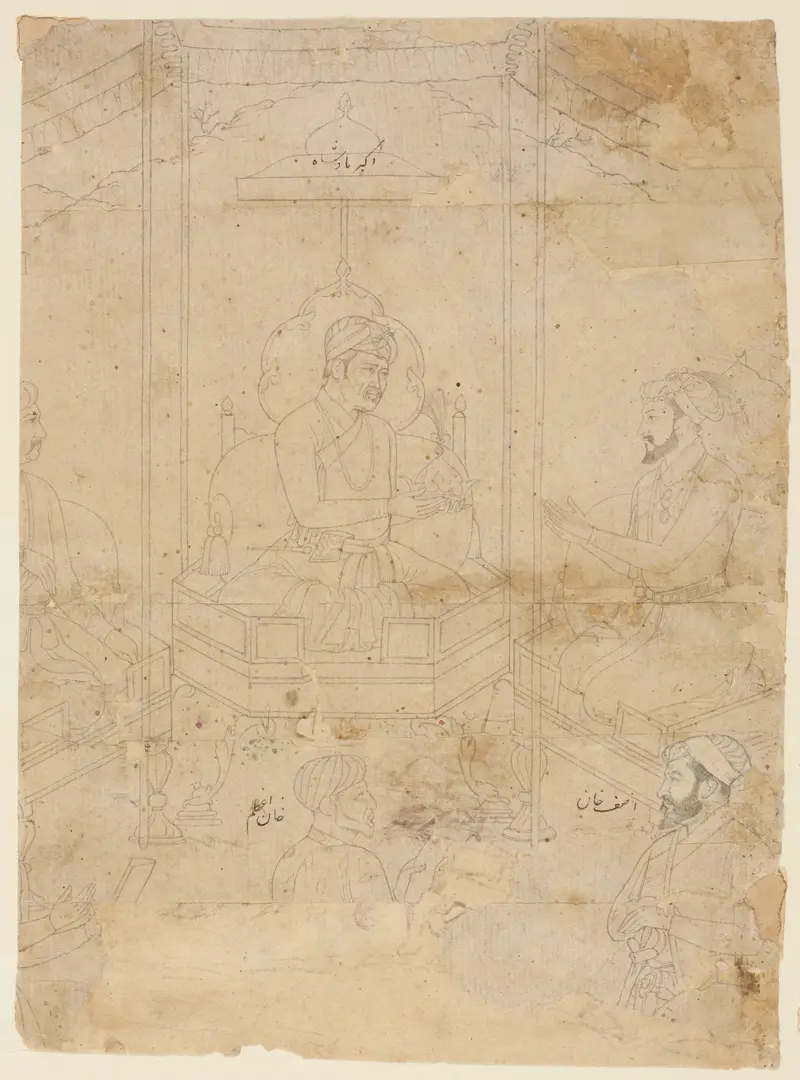
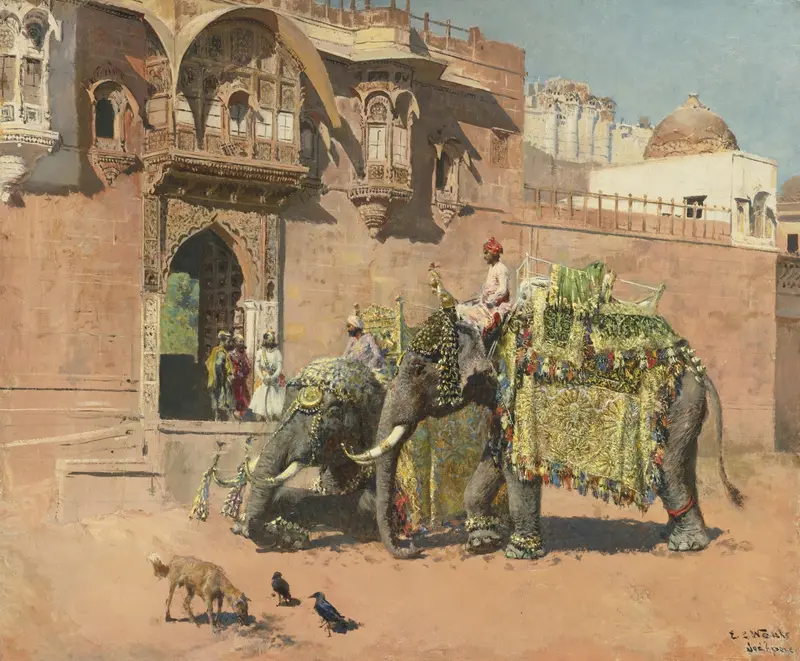




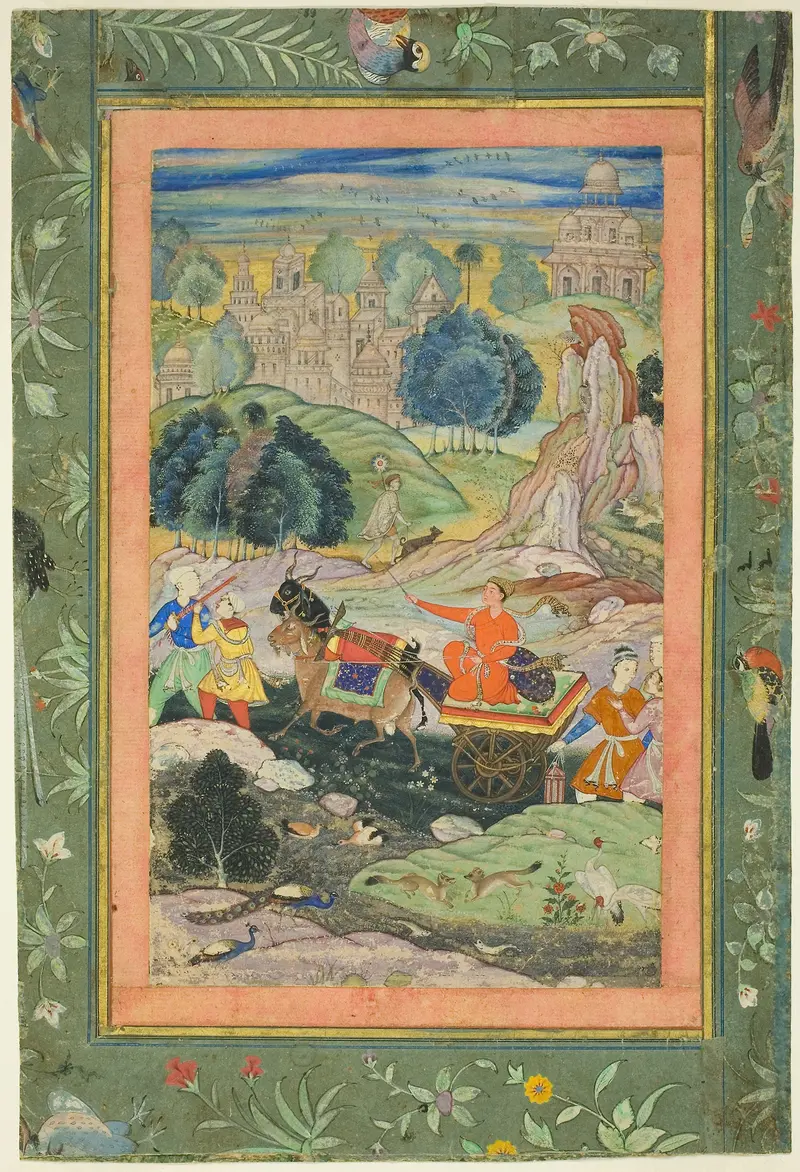
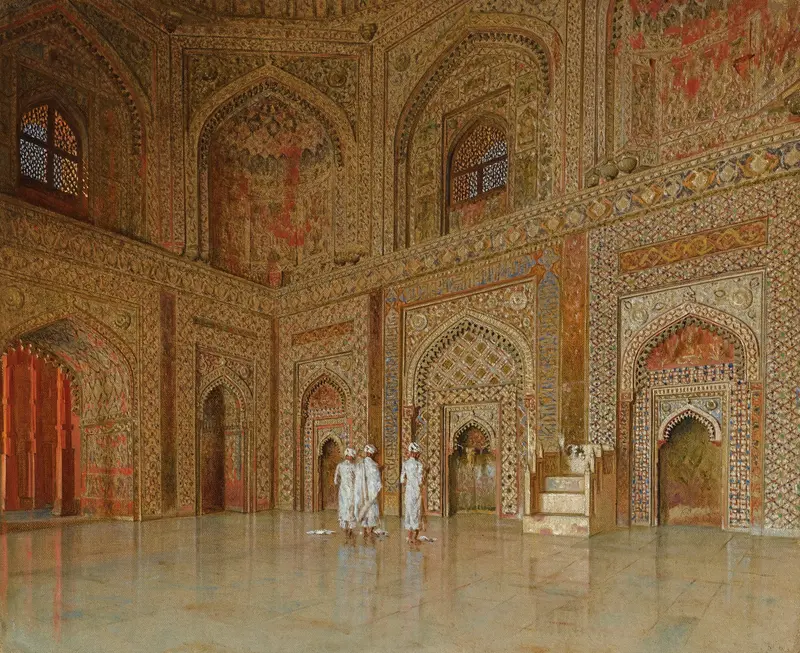
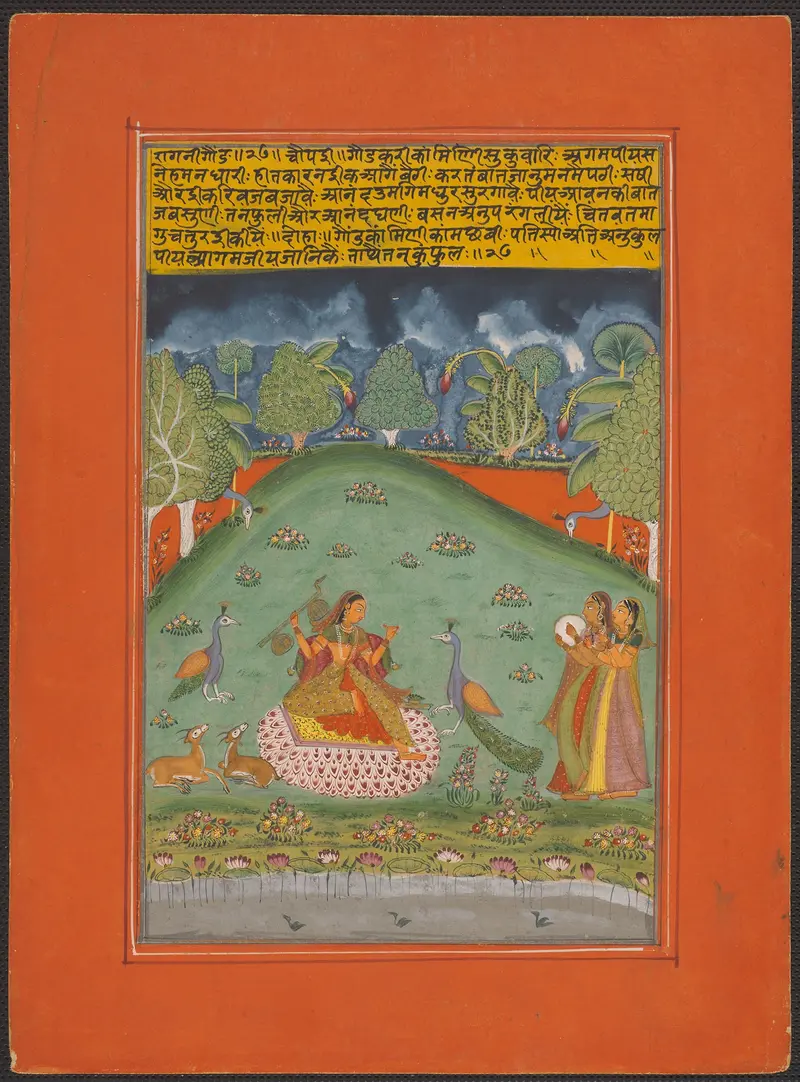
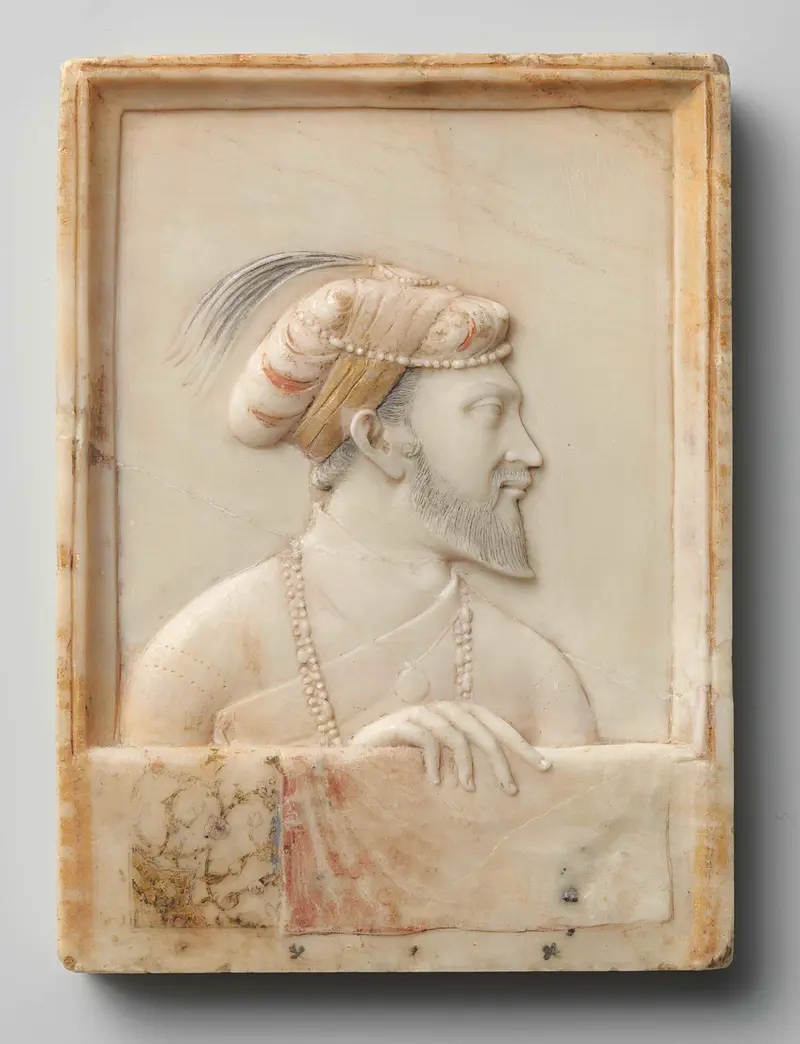


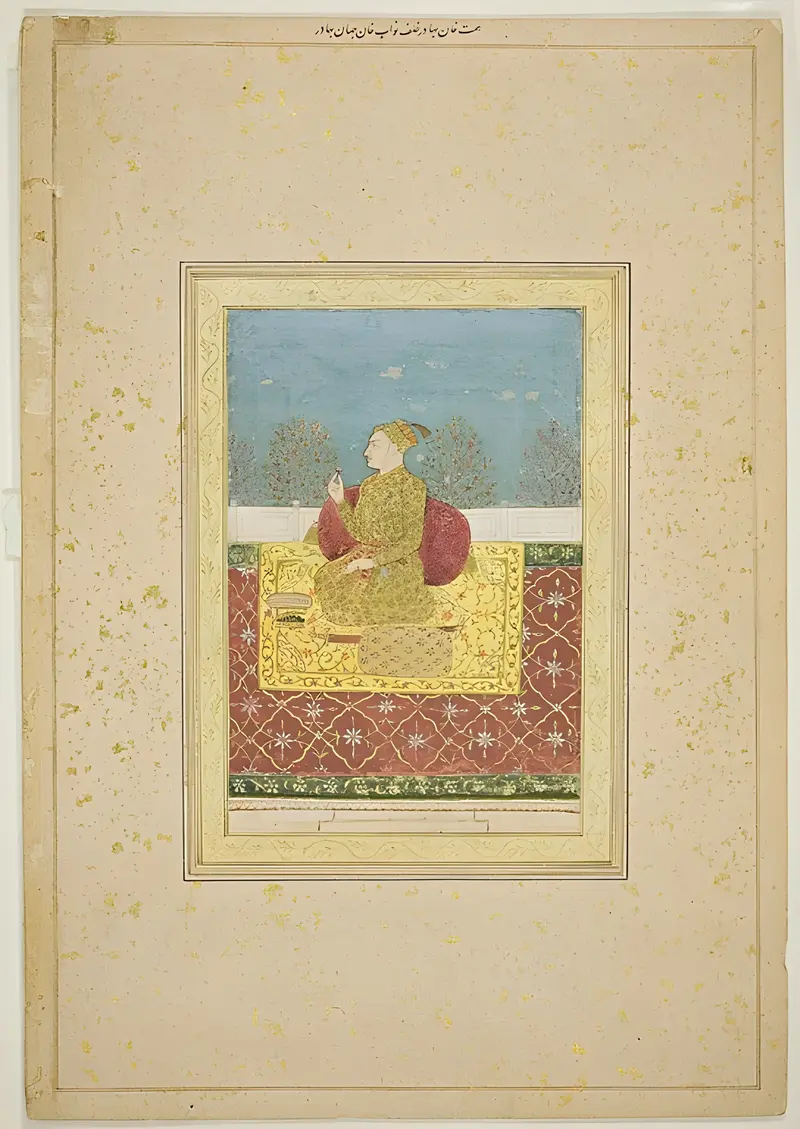
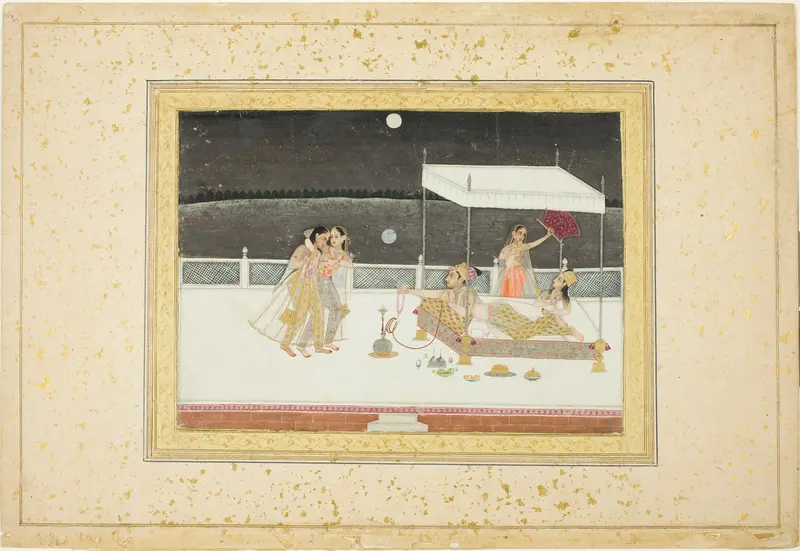
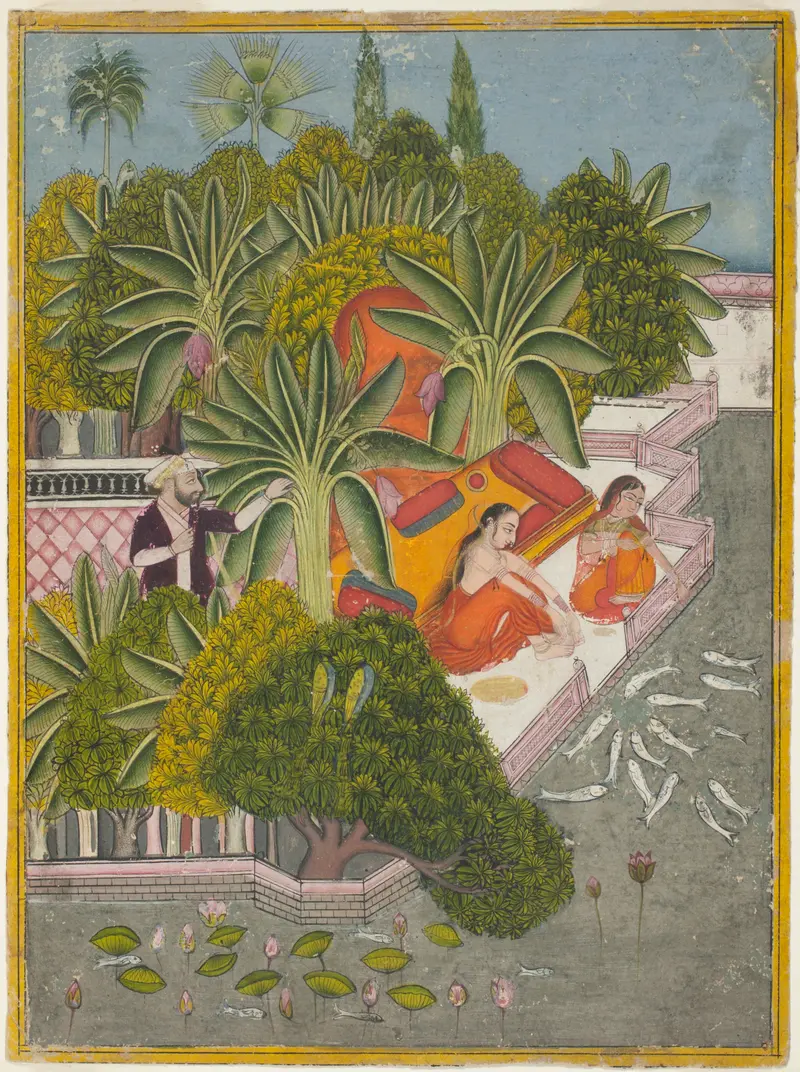
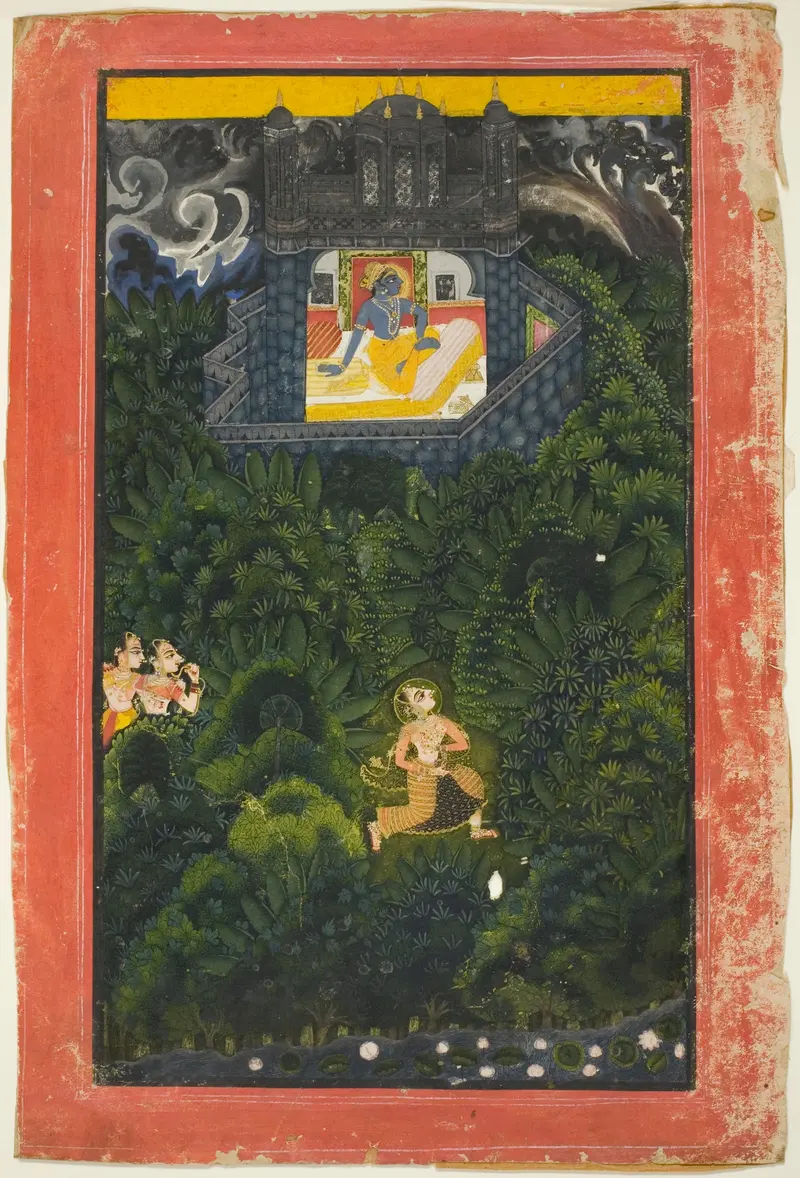
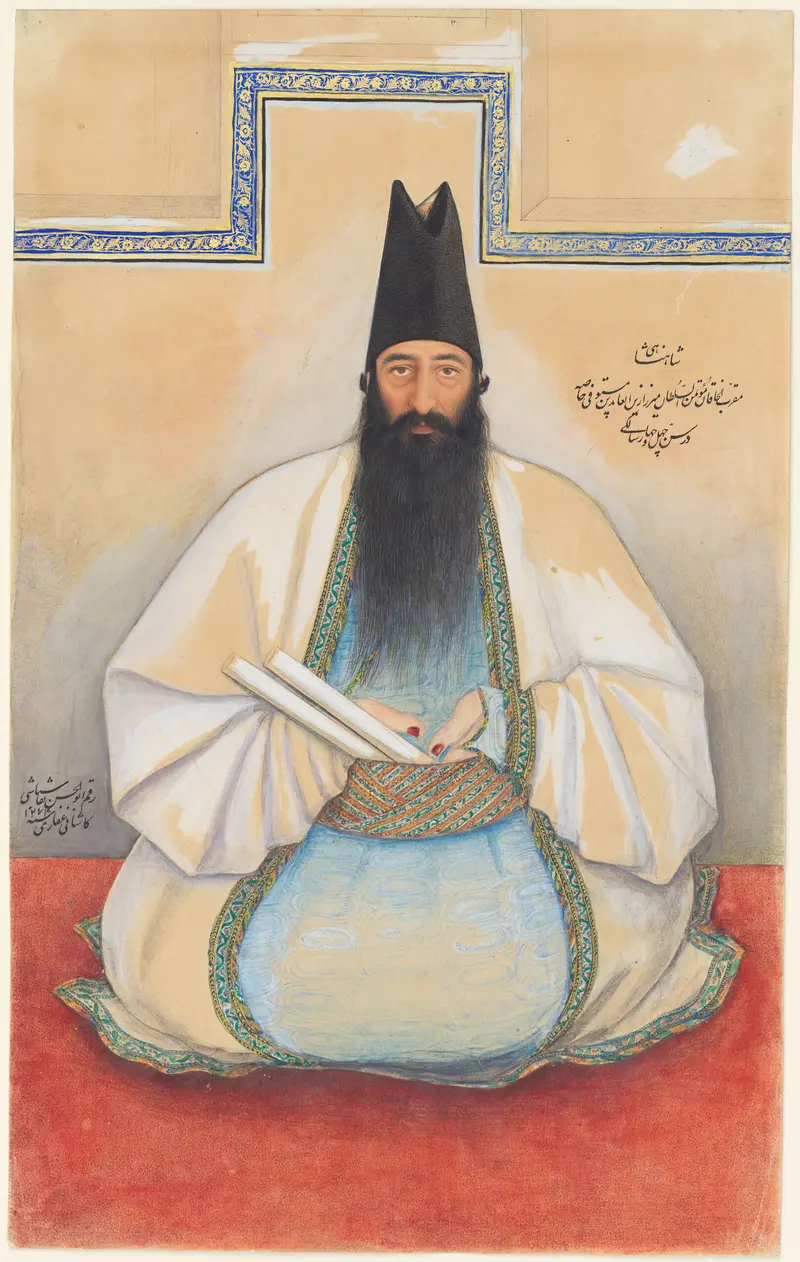
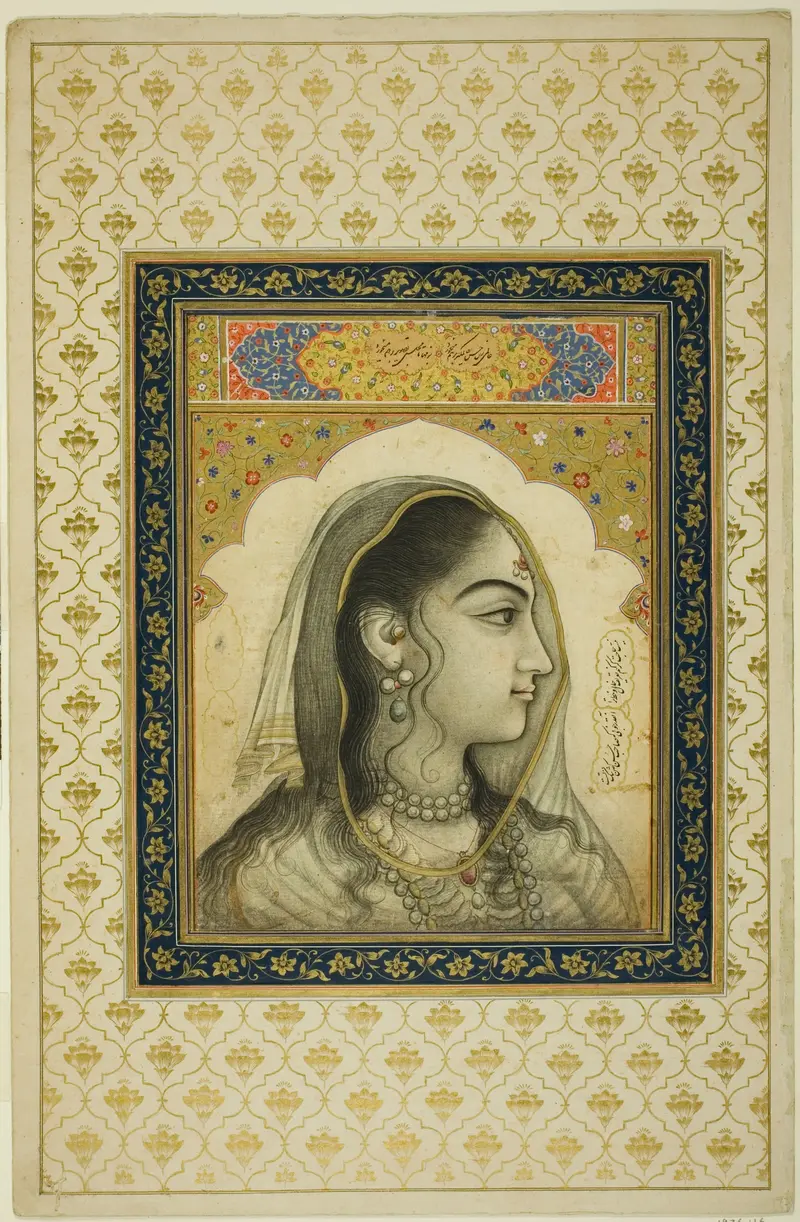
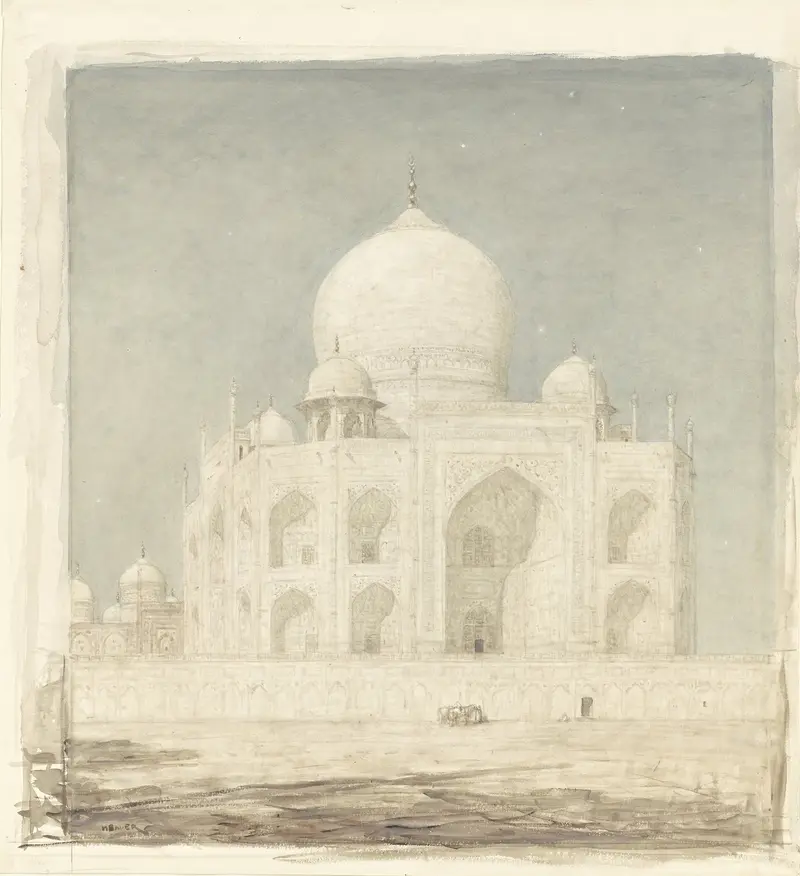


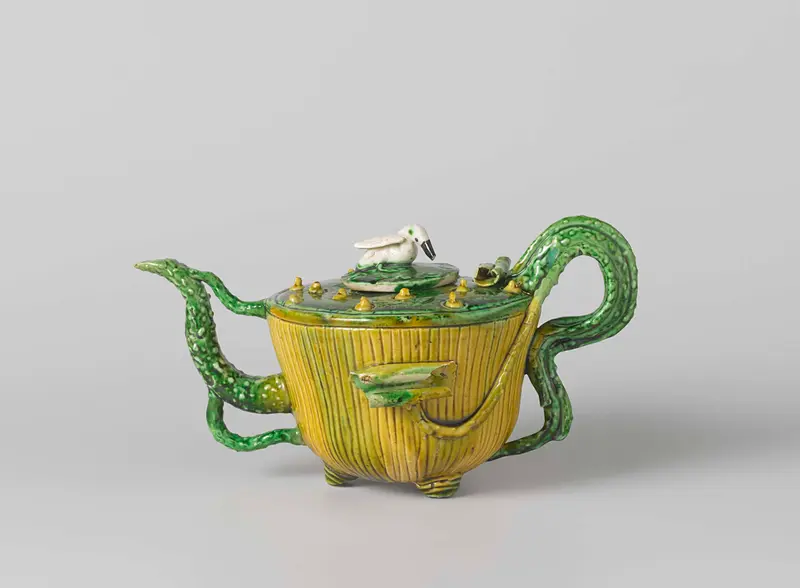

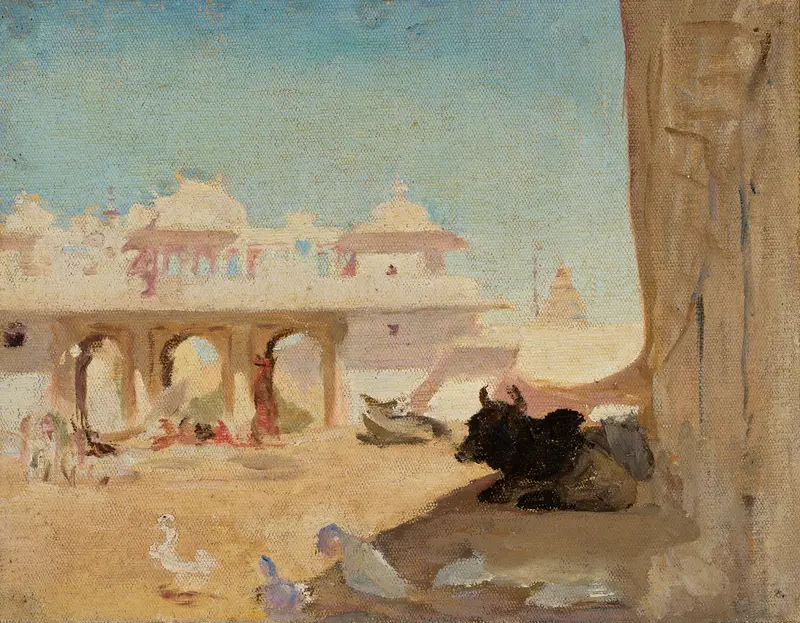
Famous Mughal paintings
Mughal miniature paintings of the Mughal empire, from the illustrated books and albums of the emperors. Click any painting to see it up close and download it free.
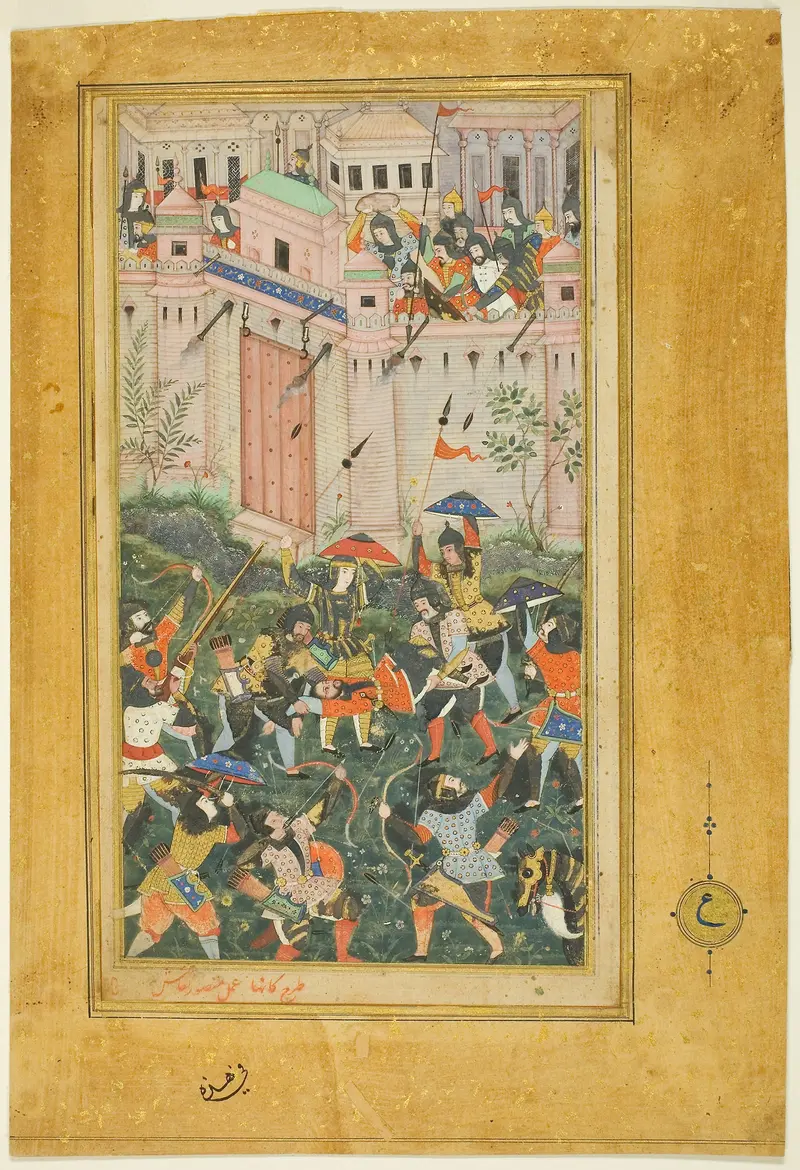 Baburnama: Kichik Beg Wounded during Babur's Attack on QalatKanha and Mansur
 Akbarnama: The Young Emperor Akbar Arrests the Insolent Shah Abu’l-MaaliBasawan and Shankar
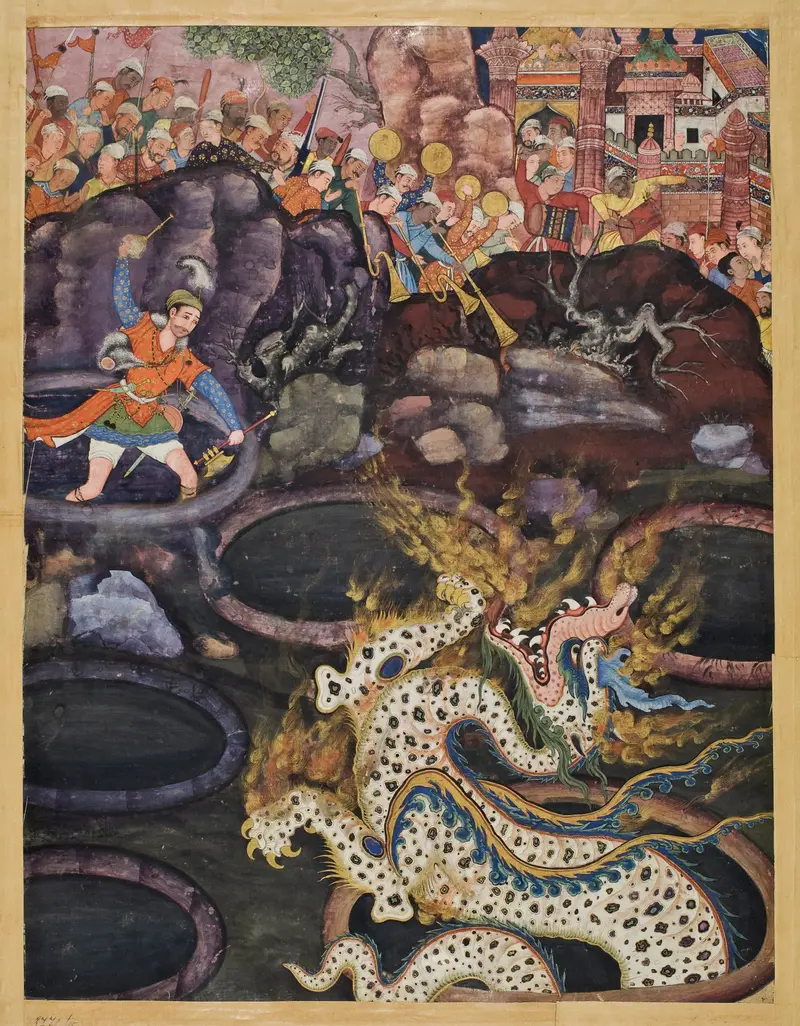 Hamzanama: Umar Defeats a DragonDaswanth and Tara (attributed)
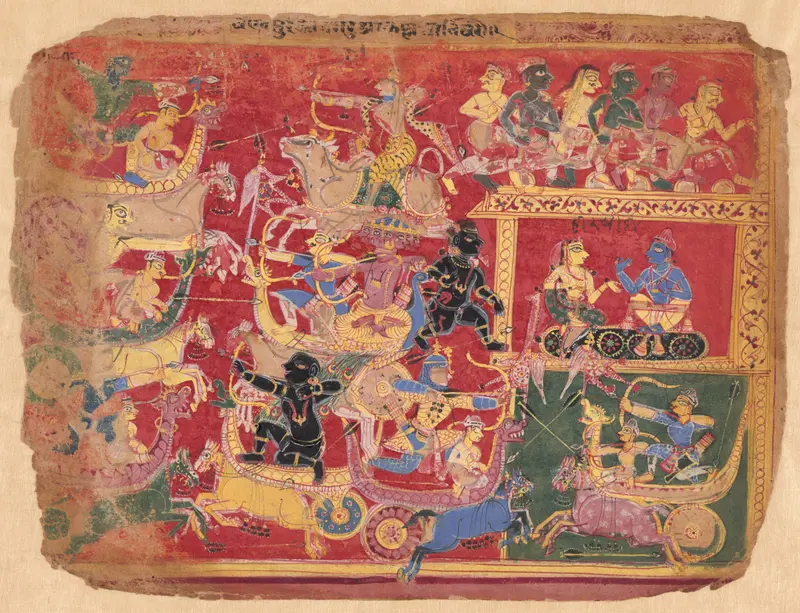
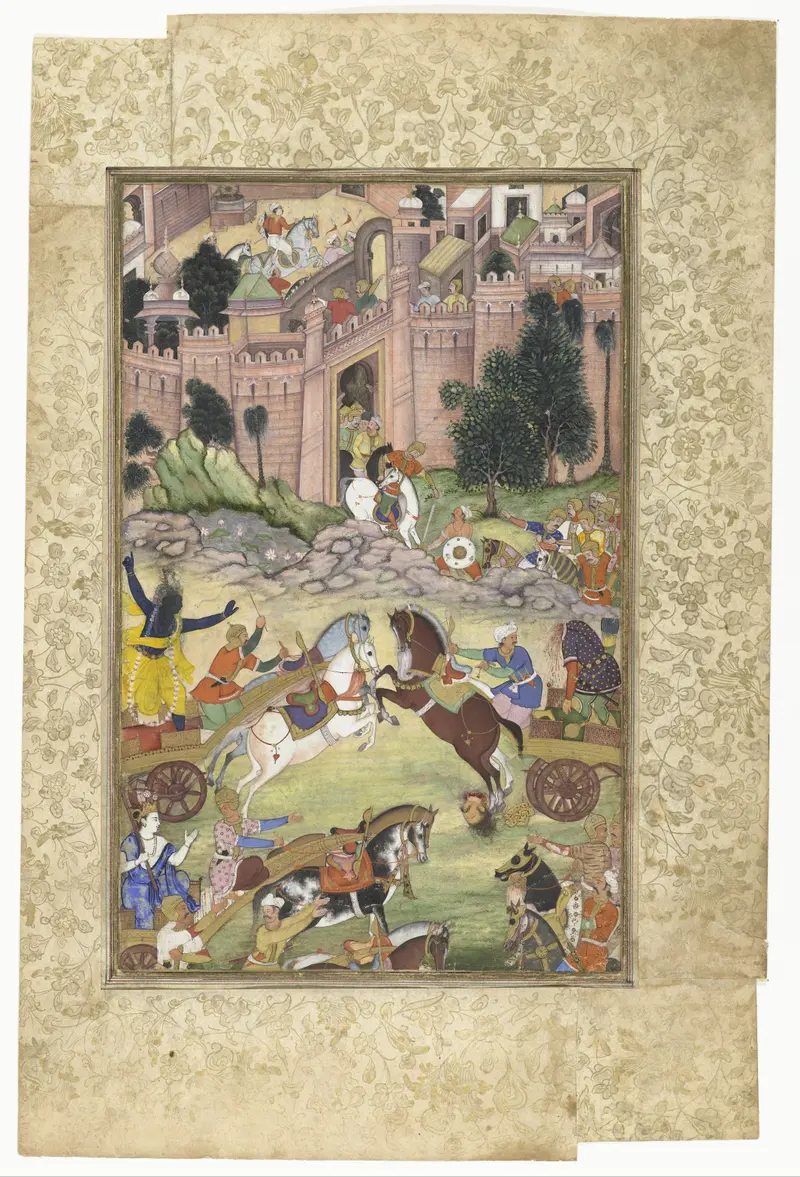
 Razmnama: Arjuna Slays KarnaFazl
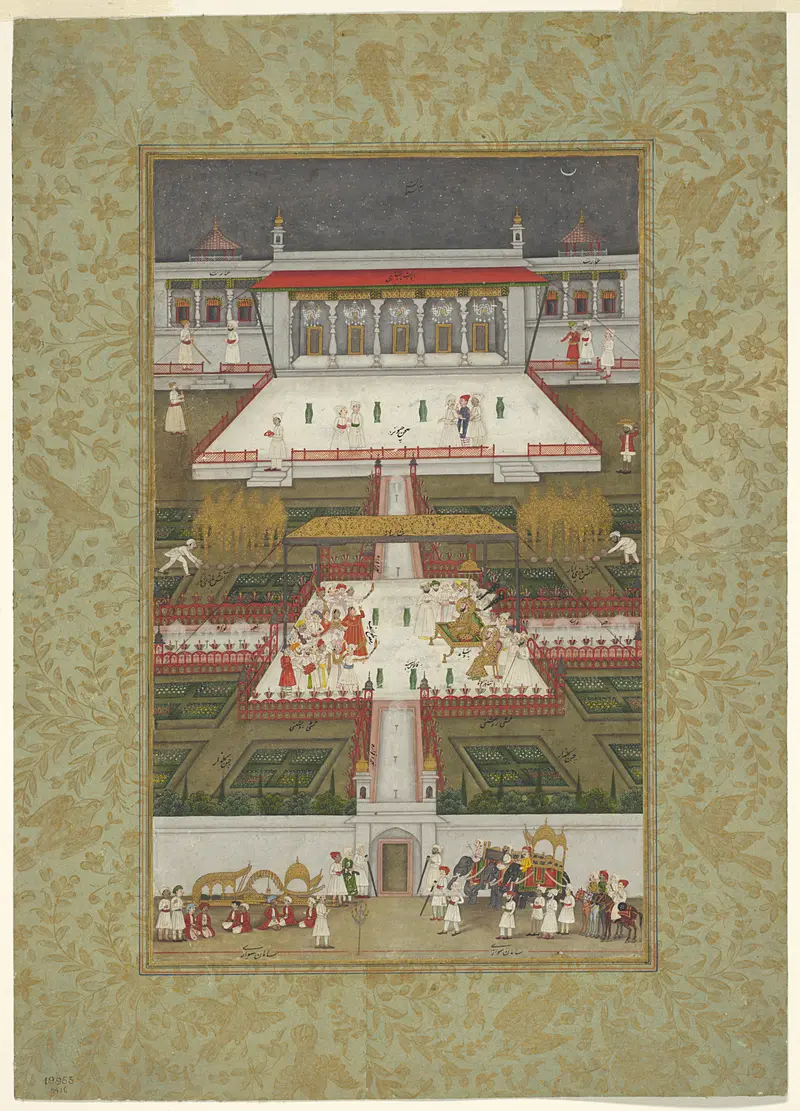
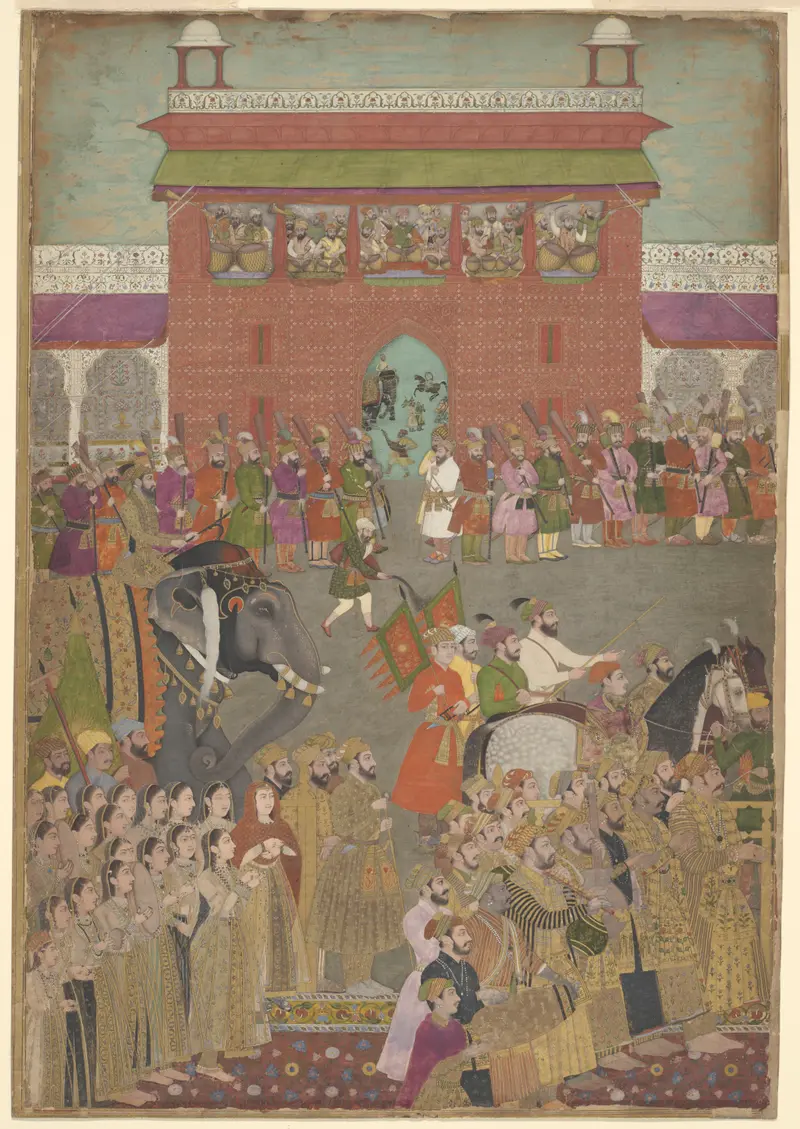 Padshahnama: A Procession Scene with MusiciansUnknown Mughal artist
 Emperor Jahangir Embraces Shah AbbasAbu’l Hasan
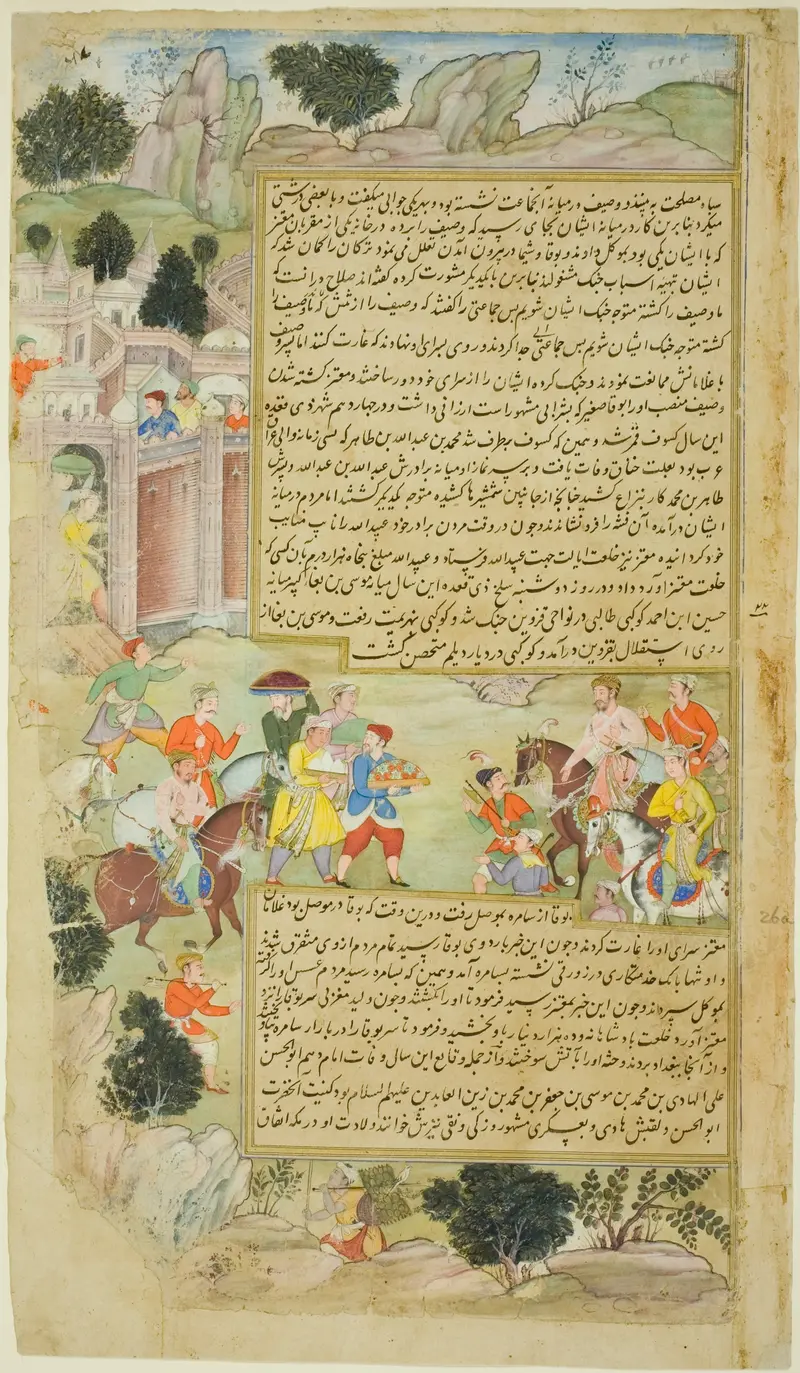 Tarikh-i Alfi: Al-Mu’tazz Sends Gifts to Abdulla ibn AbdullaUnknown Mughal artist
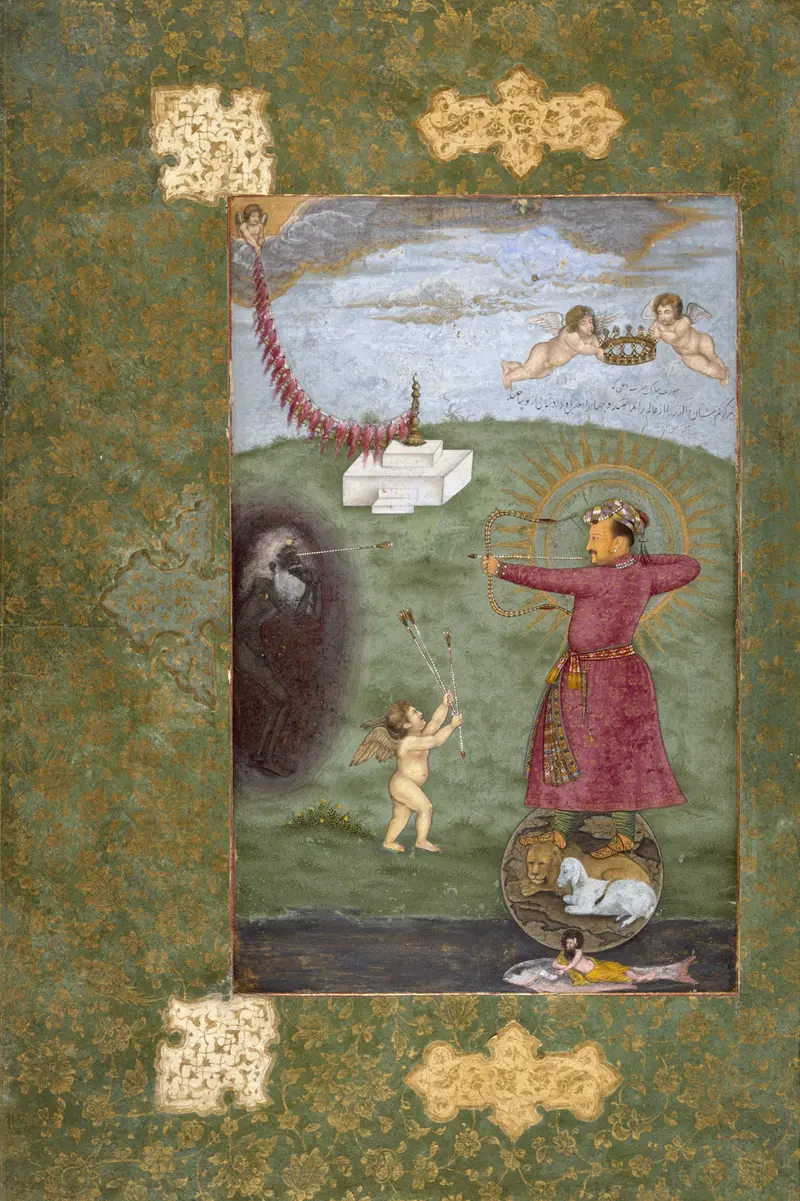 Emperor Jahangir Triumphing over PovertyAbu’l Hasan (attributed)
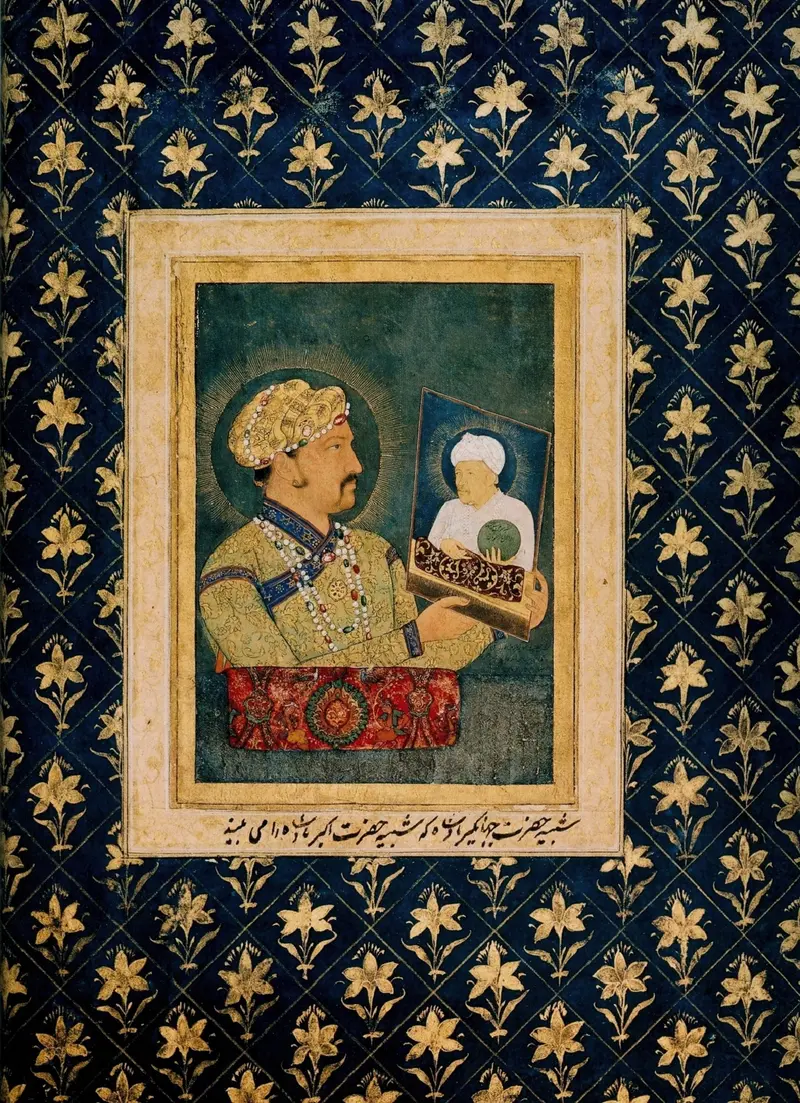 Jahangir with a Portrait of AkbarHashim and Abu’l Hasan
 Shah Jahan Album: Akbar with Lion and CalfGovardhan
Famous Mughal painters
Mughal miniature painters of the imperial workshop, from Akbar's reign to Shah Jahan's. Each link opens all their paintings.
- DaswanthDied 1584. A painter of Akbar's workshop from its first years: the Cleveland Museum of Art's Tuti-nama of about 1560 has pages by him, and the MAK in Vienna attributes the Hamzanama page Umar Defeats a Dragon to him, with a question mark.
- BasawanActive c. 1560–1600. One of the leading painters of Akbar's studio and a fine portraitist; his earliest known works are in the Tuti-nama of about 1560, and he helped shape the Mughal style.
 Keshavdas (Kesu Das)A painter of Akbar's workshop. The MAK names Kesava Dasa among the painters of the Hamzanama, and the Rijksmuseum attributes to him this Roman hero of about 1590–95, copied from two prints by Hendrick Goltzius.
 Farrukh ChelaActive 1580–1604. A painter of Akbar's workshop who worked on the late copy of the Akbarnama, finished shortly before Akbar's death in 1605.
 ManoharActive c. 1582–1624. Basawan's son, born into court service; under Jahangir he was one of the most important artists of the studio and painted some of its best-known portraits.
- Abu’l HasanBorn into the service of the Mughal court. Jahangir honored him with the title Nadir al-Zaman, Wonder of the Time, an honor only Mansur shared; he painted the emperor's allegorical portraits.
- HashimActive 1598–c. 1650. A portrait painter for Jahangir and Shah Jahan; an inscription on the Louvre's Jahangir with a Portrait of Akbar says Hashim painted it and Abu’l Hasan retouched the face.
- GovardhanActive c. 1596–1645. A painter of the imperial workshop under Jahangir and Shah Jahan, known for portraits of emperors, courtiers and holy men.
 PayagActive mid-1600s. Balchand's brother, in Shah Jahan's service; Harvard calls him a master of historical narrative painting, with crowded, often gruesome battle scenes.
Mughal paintings of animals and birds
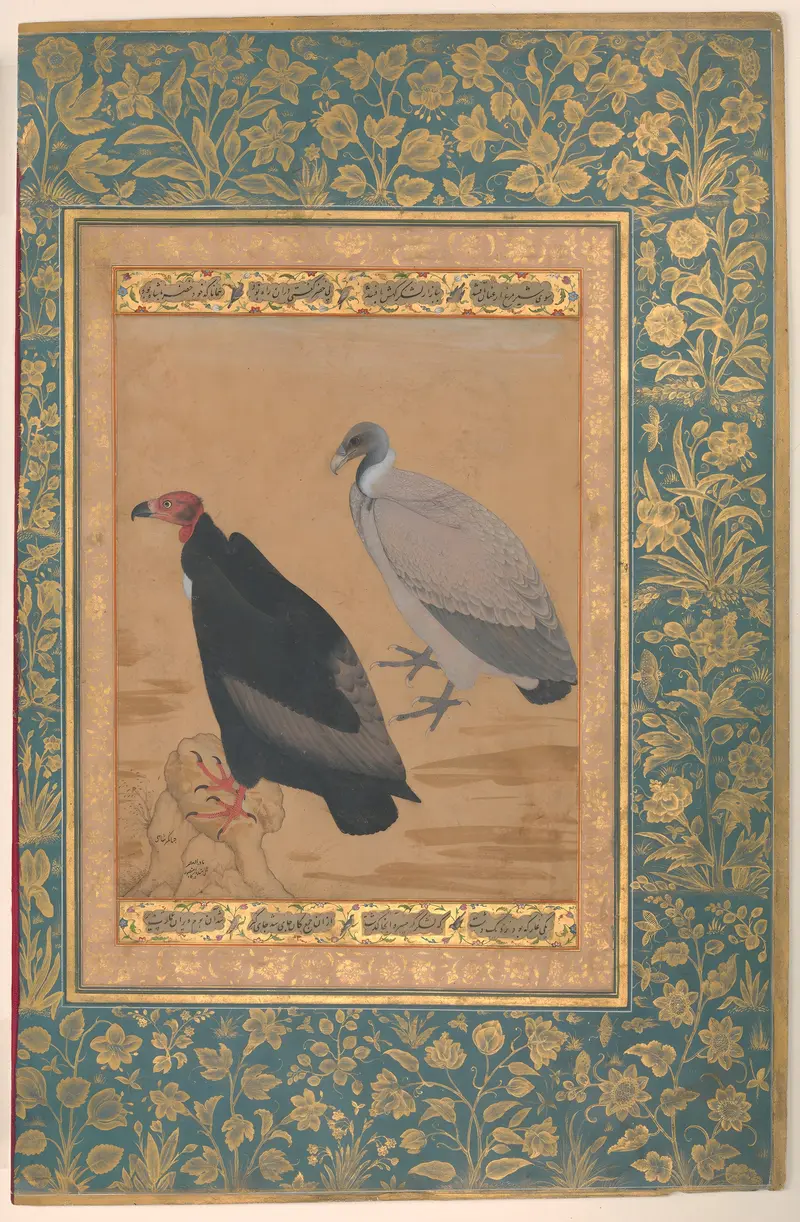
Jahangir had the rare animals and birds brought to his court described and painted, and his artist Mansur was famous for such studies, the V&A says. The Mughals kept animals out of scientific interest and to show the reach of their power, the Cleveland Museum of Art adds.
Mughal miniature portraits
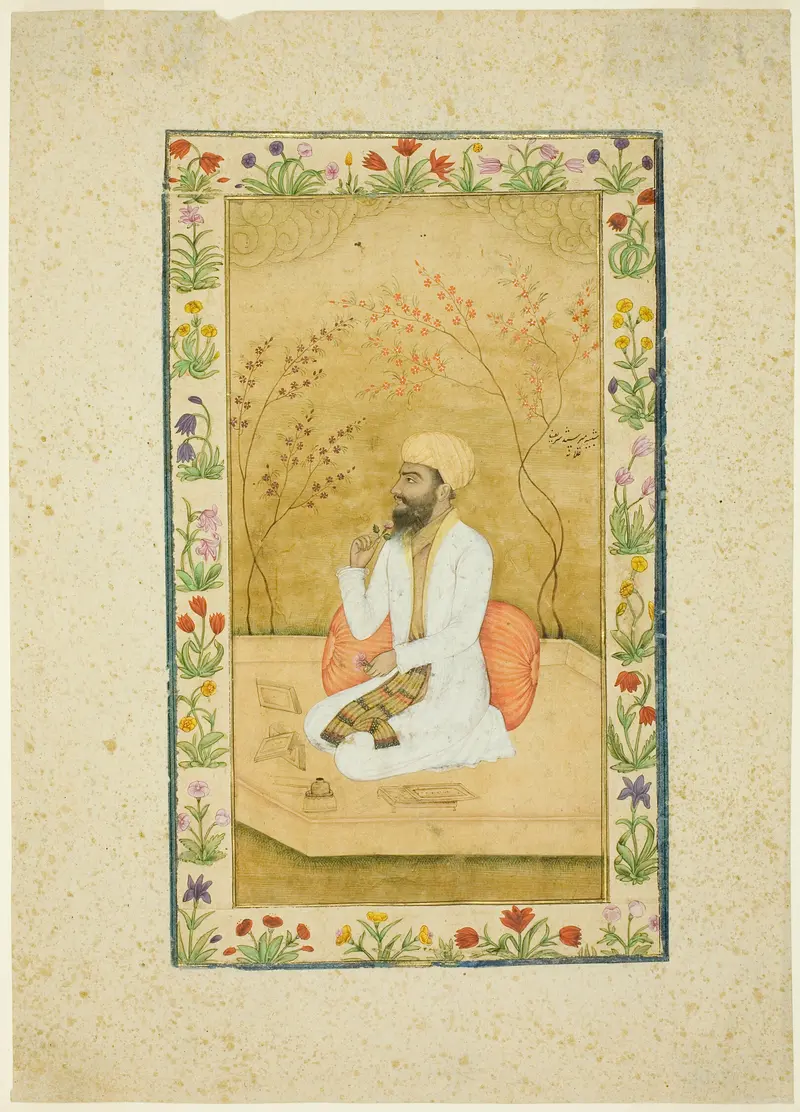
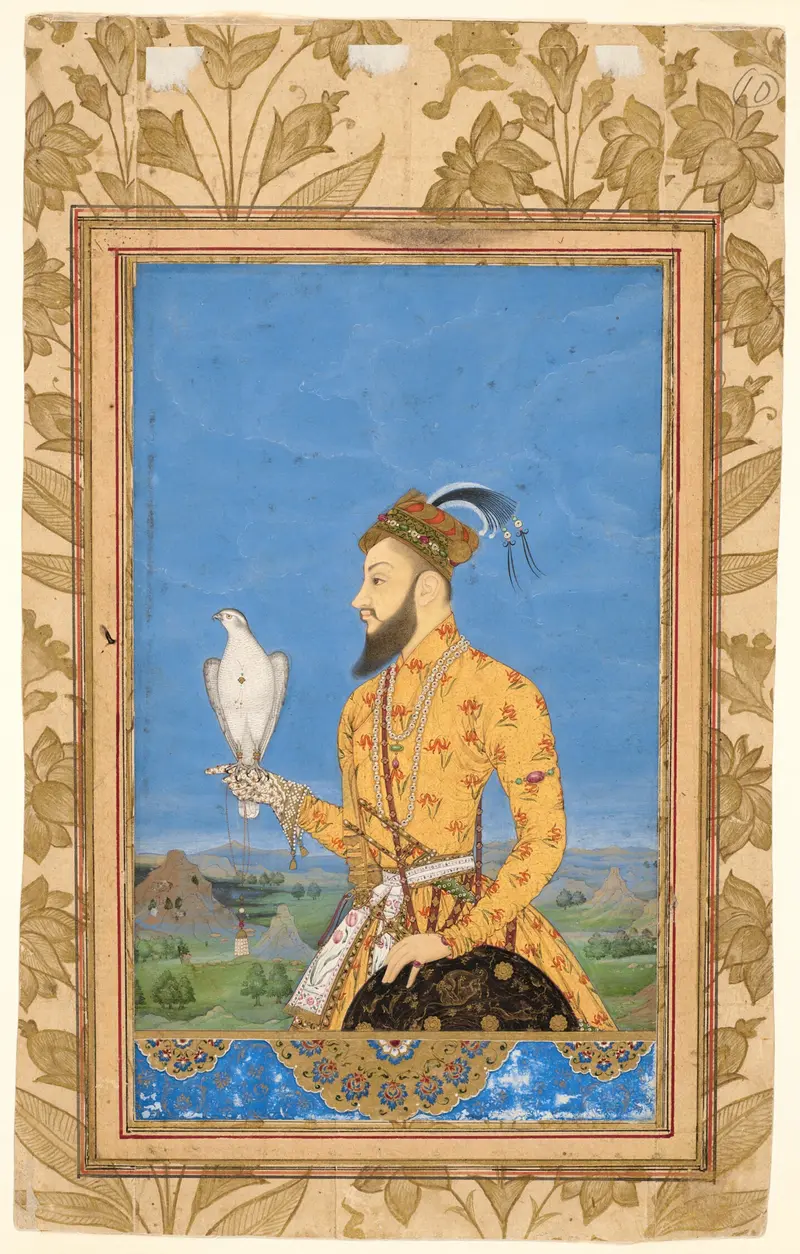
Akbar ordered likenesses taken of the grandees of his realm and gathered in an album, and Jahangir continued the custom, says the Cleveland Museum of Art. Many show one figure in profile against a plain ground, a tradition the V&A traces to the late 1500s.
Rajput painting
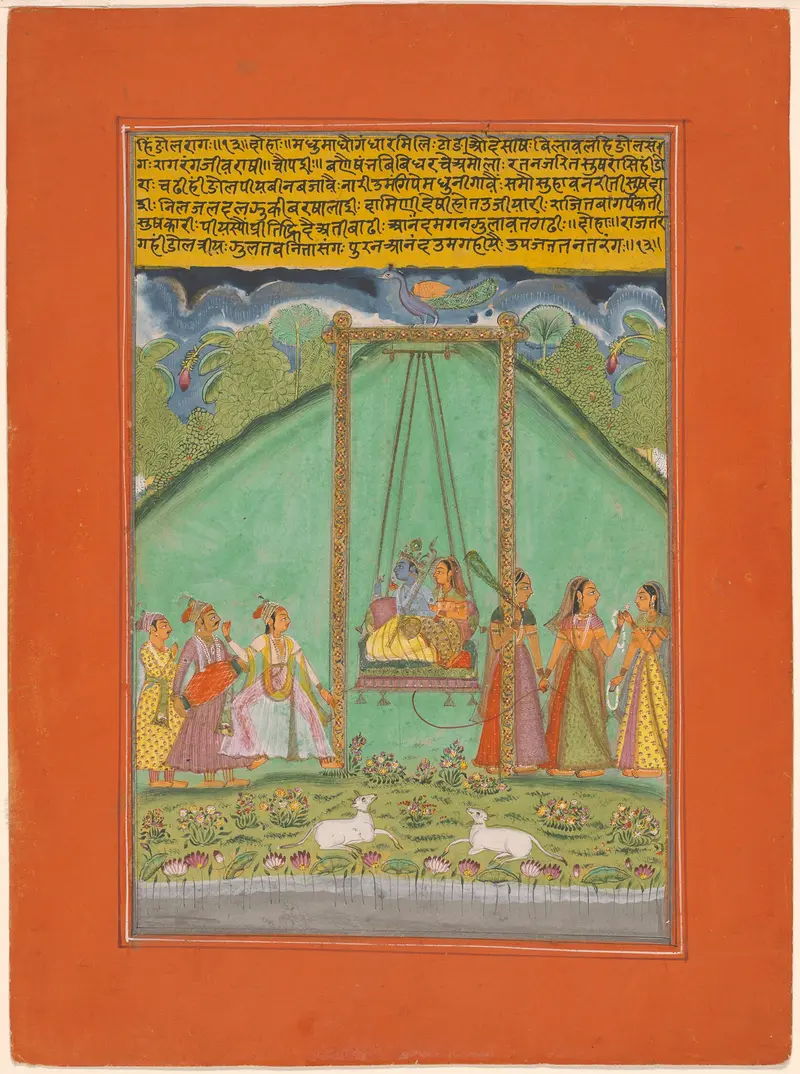
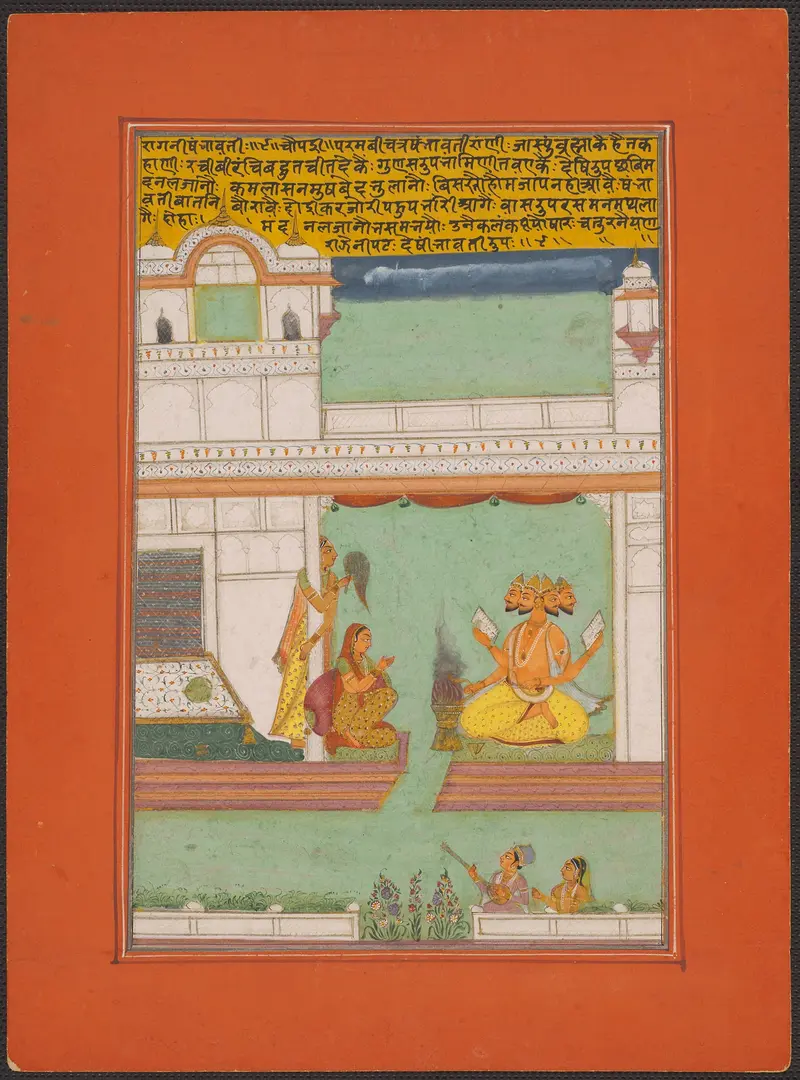
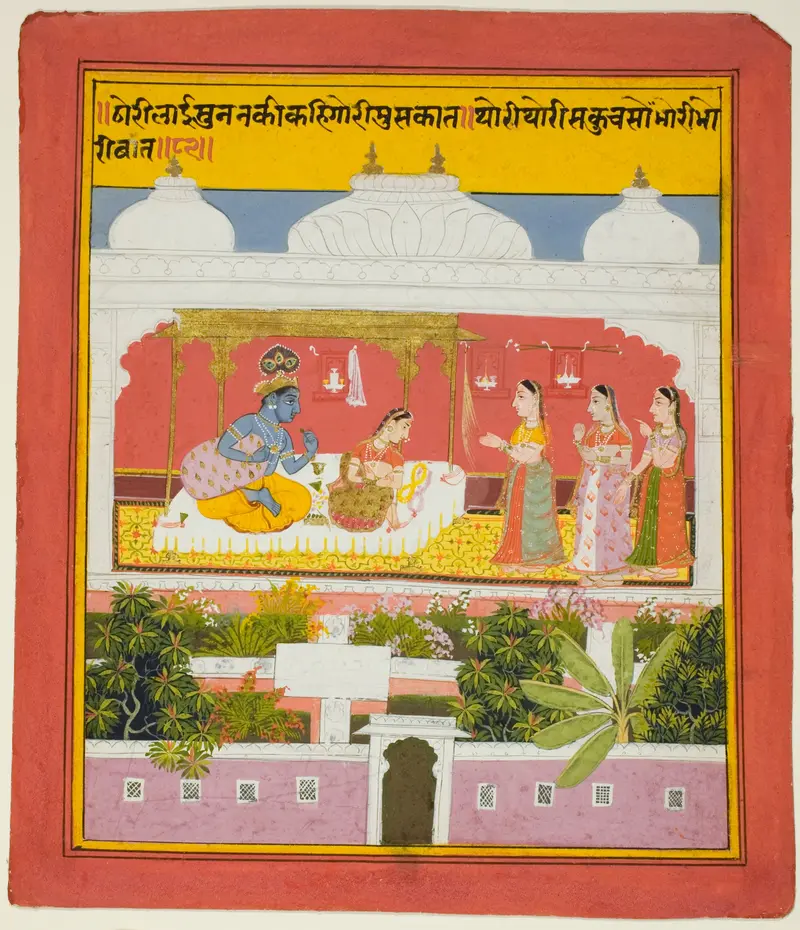
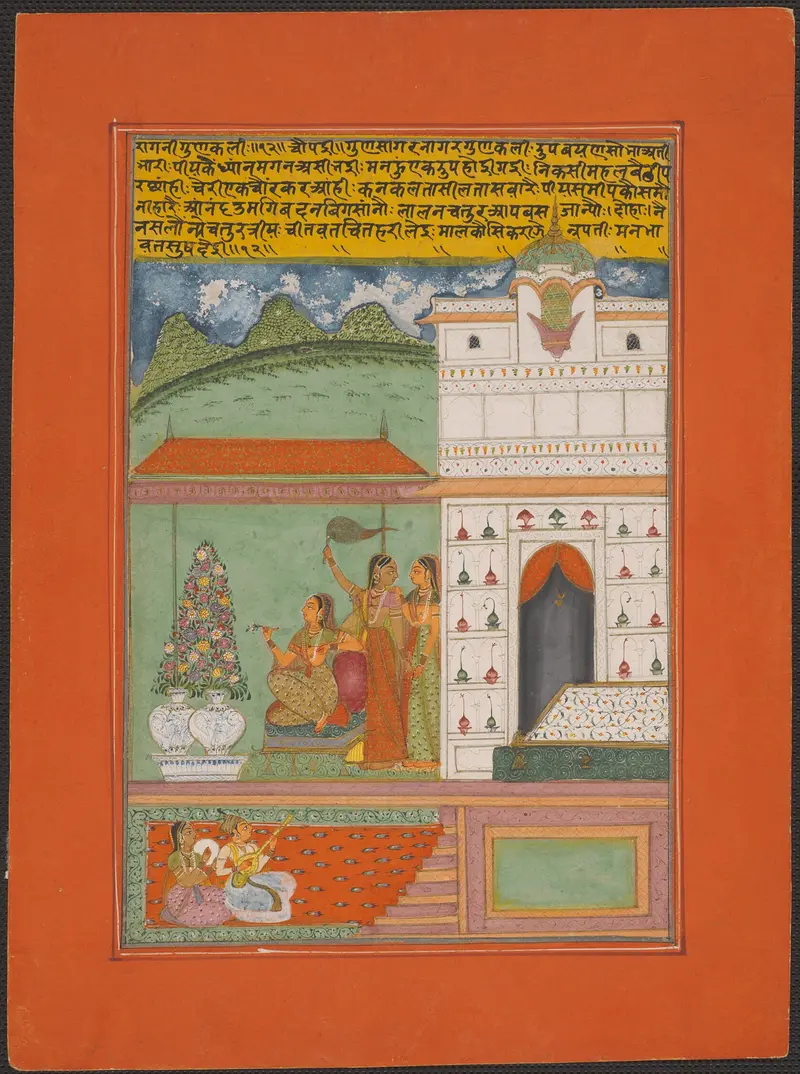
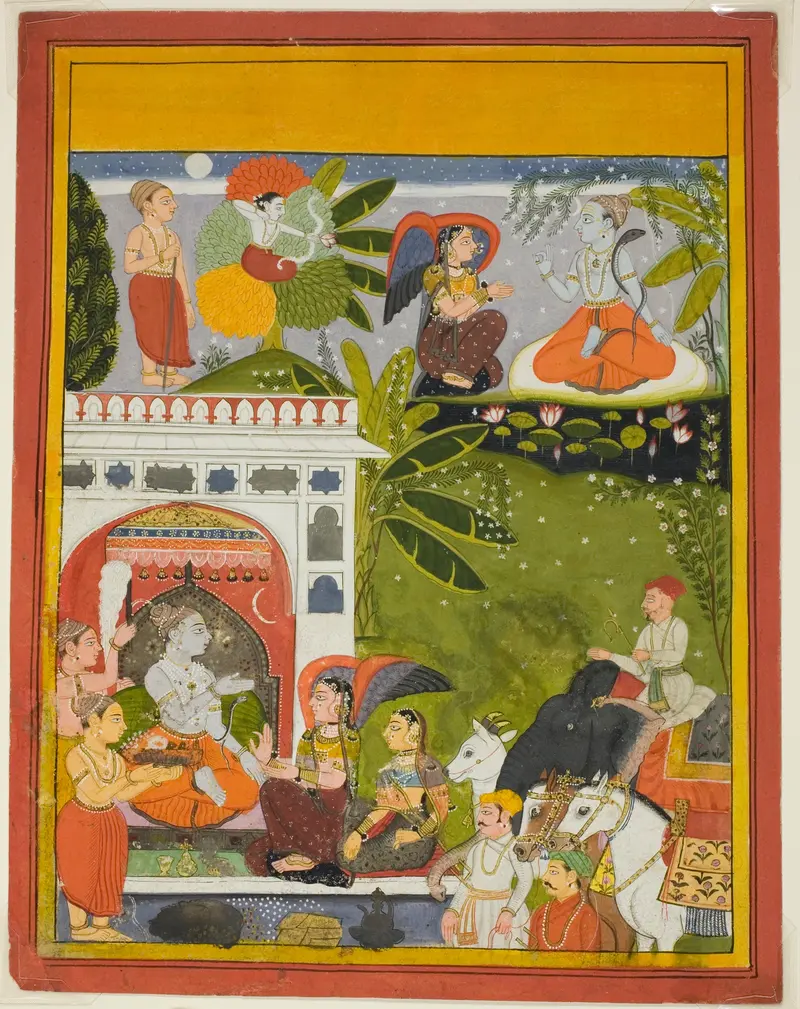
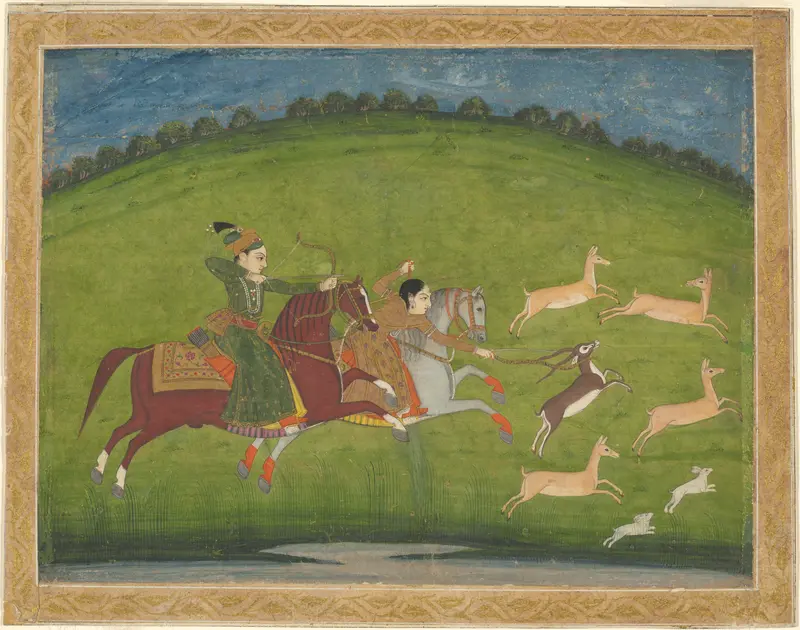
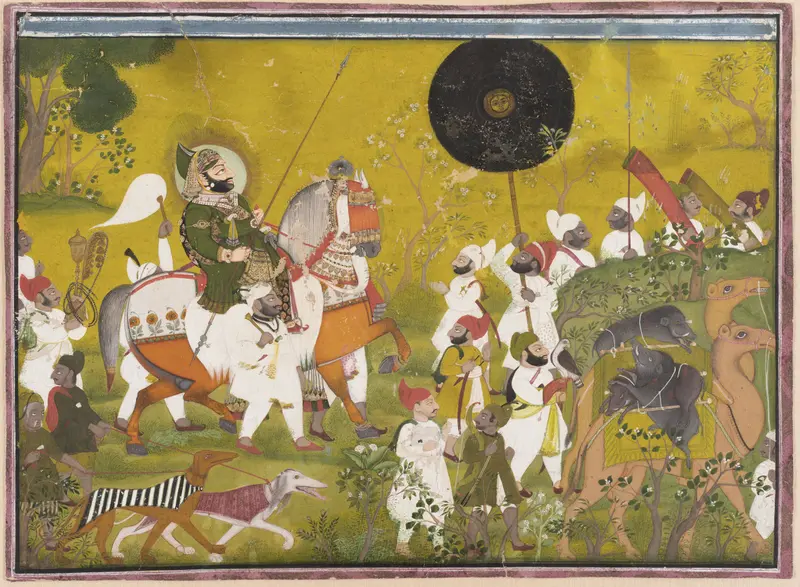
The Hindu Rajput kings of Rajasthan kept their own painters. Kingdoms such as Marwar lived under the Mughal empire and married into its family, and the same drawings served as models for Mughal and Rajput royal portraits, the Cleveland Museum of Art says. Mewar resisted the Mughals for decades until its ruler surrendered in 1615, the V&A notes.
Characteristics of the Mughal painting style: how to recognize it
Books painted by teams
Basawan designed this page and Shankar painted it, and their names are written in red below the picture. Akbar's workshop worked this way on its great books: the V&A counts at least 49 artists on its copy of the Akbarnama, often one drawing the outline and another adding the color.
History full of tiny figures
Payag packs the battle of 1658 between Shah Jahan's sons Dara Shikoh and Aurangzeb into one sheet: armies, elephants and horses swirl across the plain, and tiny Persian labels name who is who. Harvard calls him a master of historical narrative painting.
The Battle of Samugarh, Payag
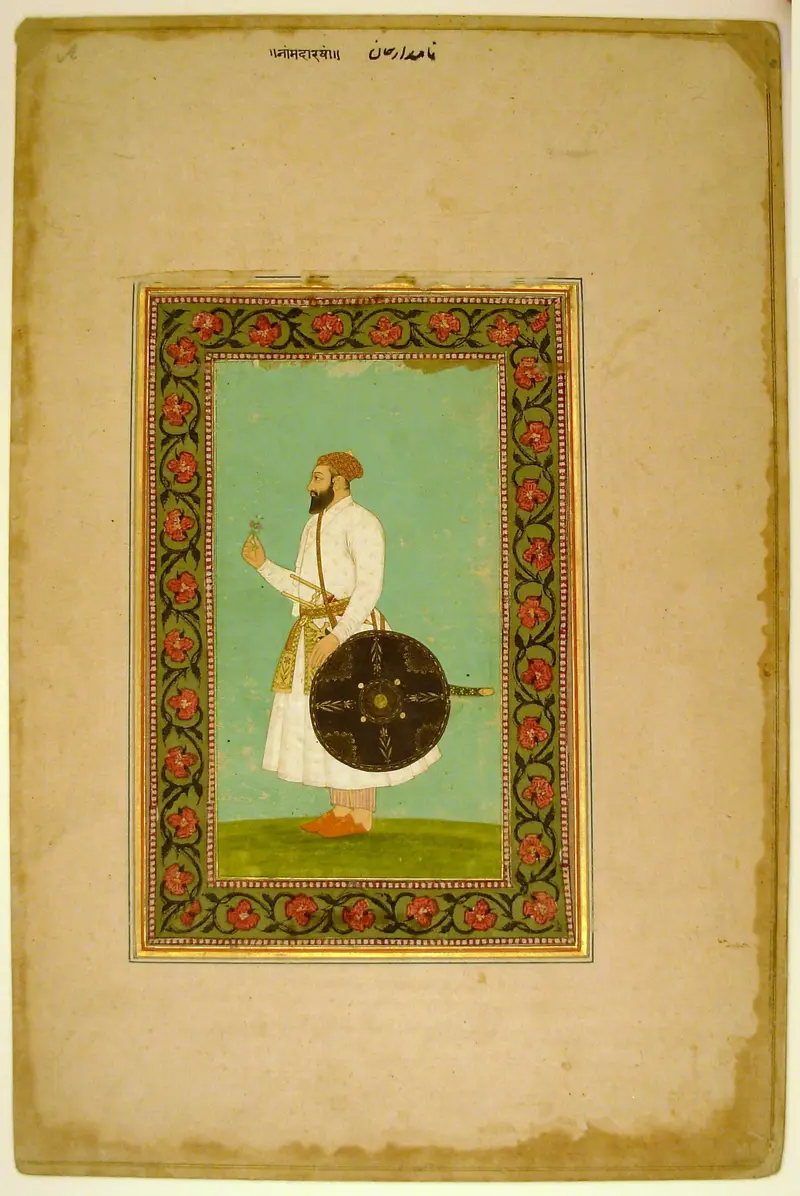
Portraits in profile
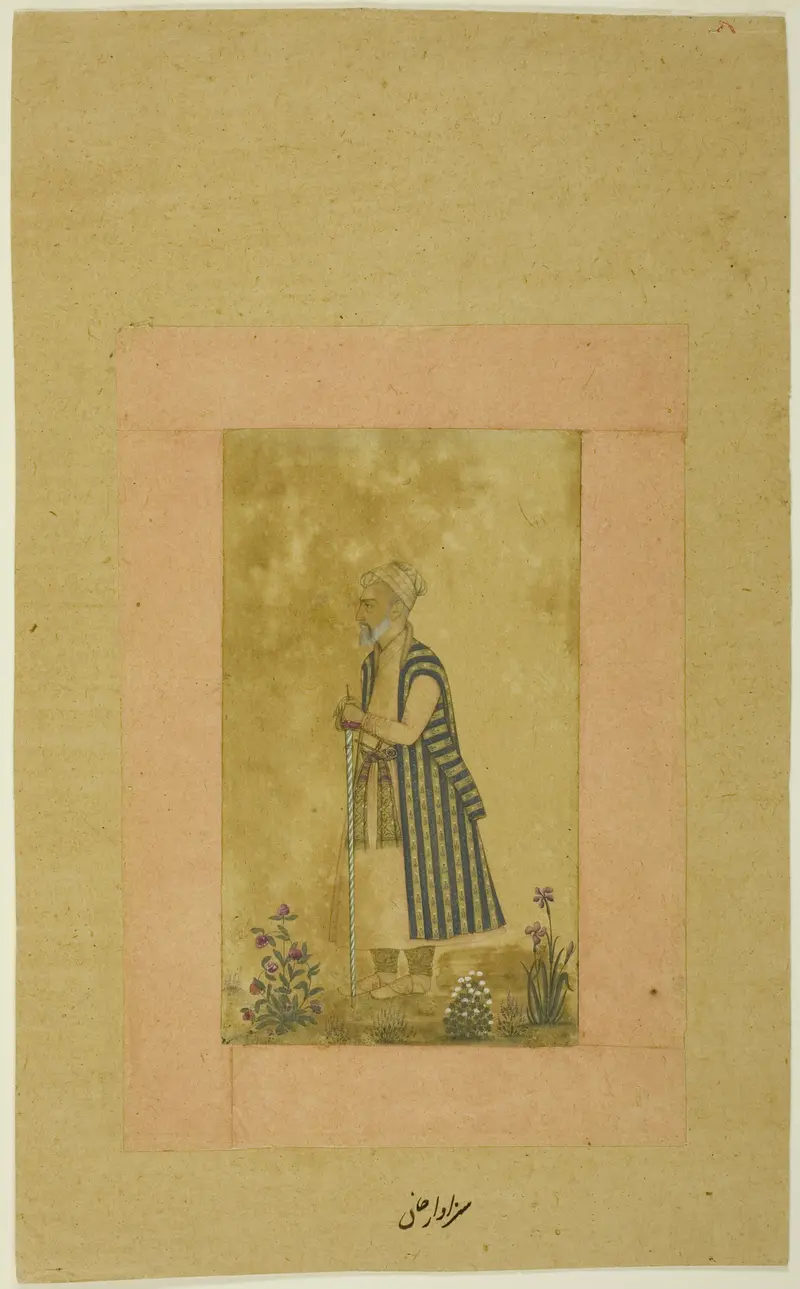
A courtier stands full length in strict profile against a plain green ground, a way of painting a figure that began at the Mughal court in the late 1500s, the V&A notes. Akbar had likenesses of his nobles gathered in an album, and Jahangir kept up the custom, says the Cleveland Museum of Art.
Album Page with a Portrait of Namdar Khan (Side A) and Calligraphic Specimens (Side B), Mughal

Animals studied from life
Abu’l Hasan shows a female Tibetan yak in profile, wearing a red muzzle, with small pictures of rams, goats and an antelope pasted into the corners (Harvard). Jahangir had the rare animals brought to his court described and painted, and his artist Mansur was famous for such studies, the V&A says.
Tibetan Yak with Vignettes of Animals, Abu’l Hasan
Album pages with decorated borders
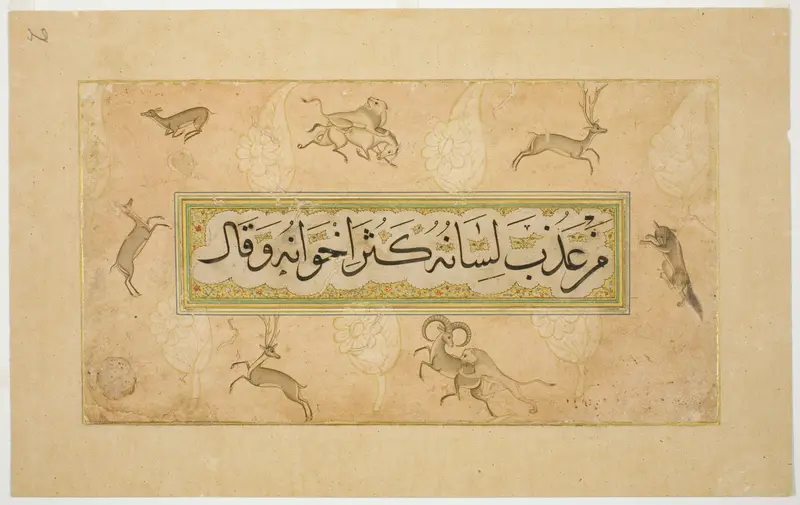
Deer and other animals drawn in gold run around a panel of older Persian calligraphy. The Mughal emperors mounted paintings and fine writing in albums with wide decorated borders, sometimes a century younger than the calligraphy they frame, as the Cleveland Museum of Art describes; Shah Jahan had new floral borders added to older paintings, the V&A says.
Album Page with Calligraphic Specimen and Animal Border, Mughal
European ideas
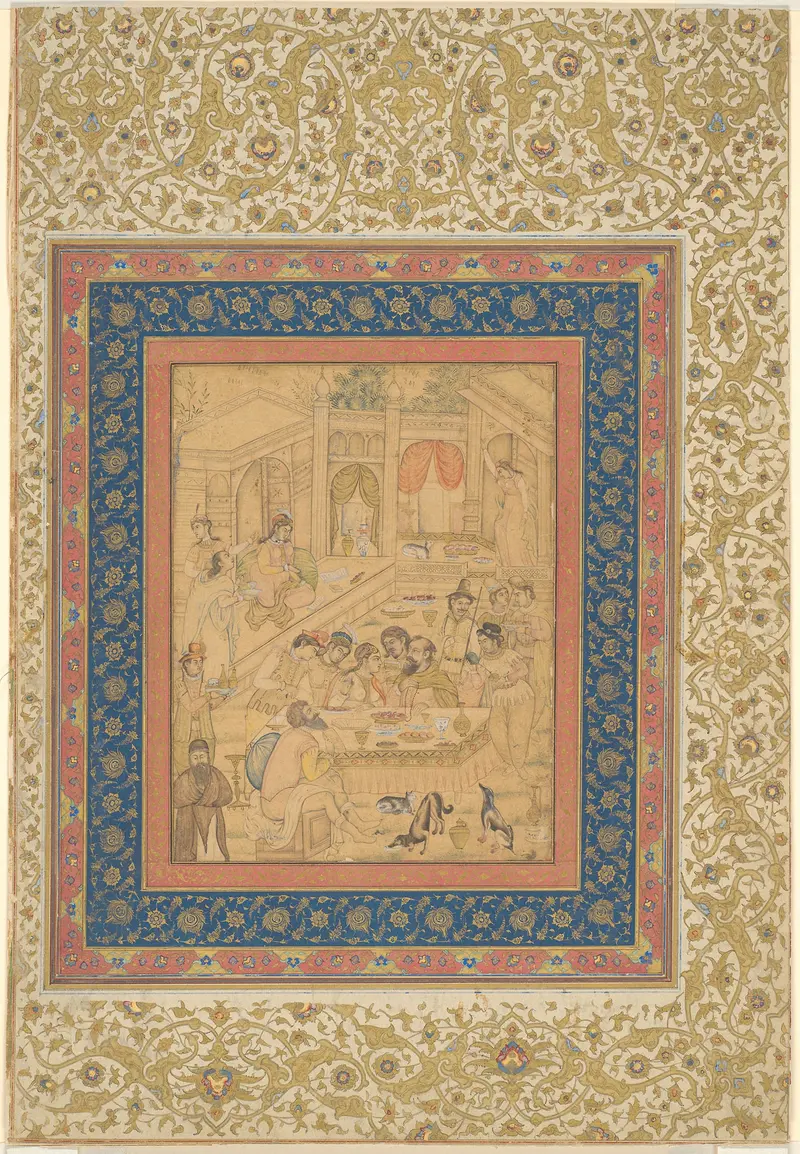
This Mughal banquet scene of about 1600 may show the Marriage at Cana from the Bible. European prints reached Akbar's collection and gave his painters distant views, rolling hills and paler color, says the Cleveland Museum of Art; later painters also borrowed perspective and hovering cherubs.
European Banquet Scene (or The Marriage Feast at Cana?), Mughal
Before and after Mughal painting
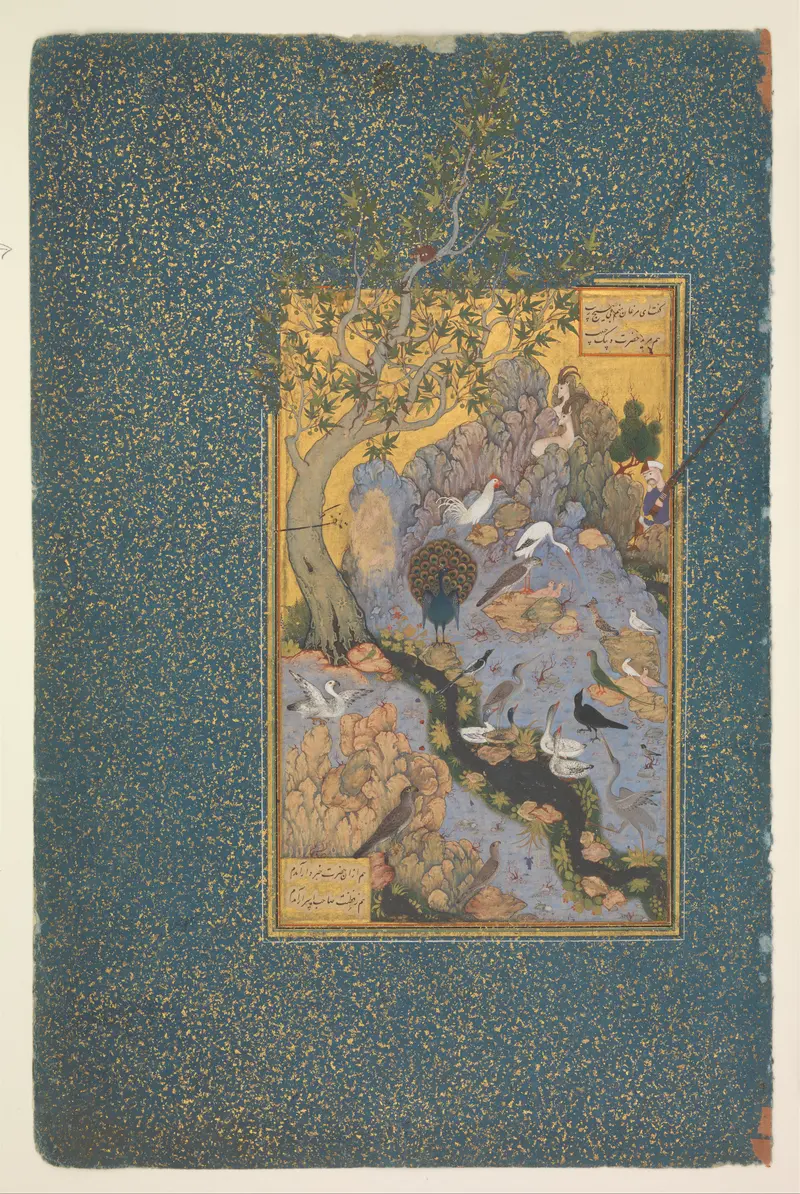 Islamic artlate 13th–17th century
- Mughal painting16th–18th century
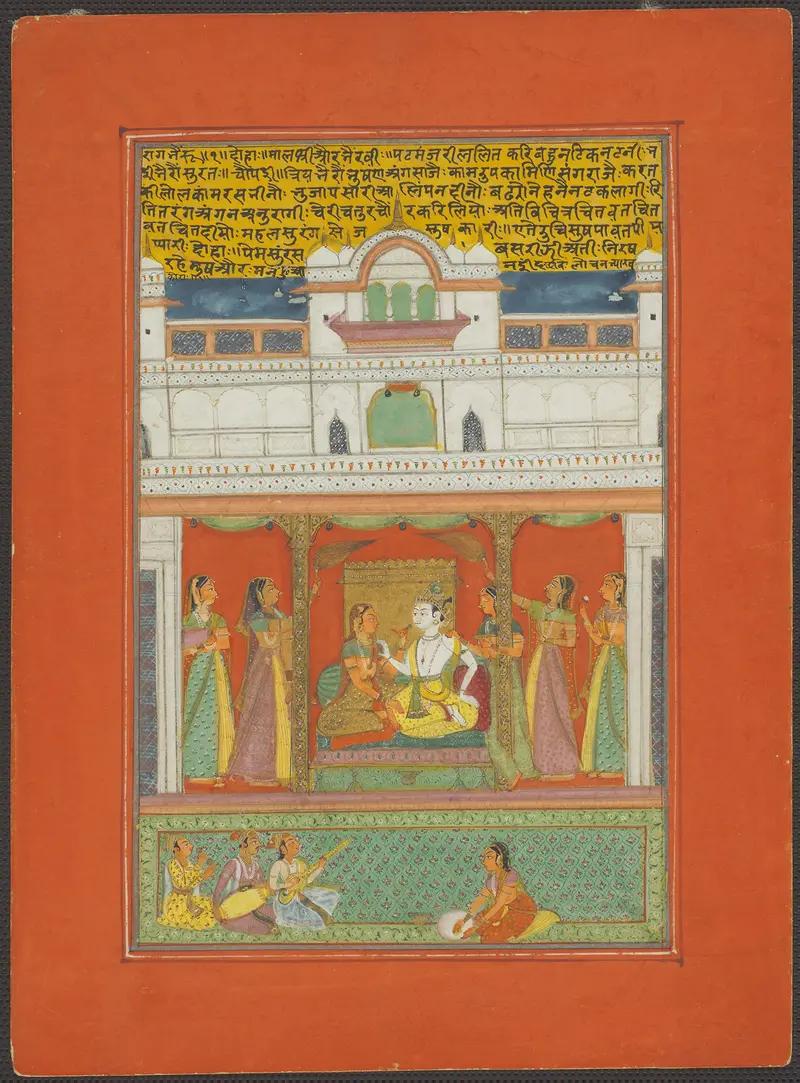 Indian painting16th–19th century
 Dutch Golden Age17th century
 Orientalism19th century
Mughal painting vs Persian and Rajput painting
| Compared | Persian painting | Mughal painting | Rajput painting |
|---|---|---|---|
| When | Late 13th–17th century | 16th–18th century | 16th–19th century |
| Made for | Shahs and princes of Iran and Central Asia | The Mughal emperors and their nobles | Hindu Rajput rulers of Rajasthan and the Himalayan foothills |
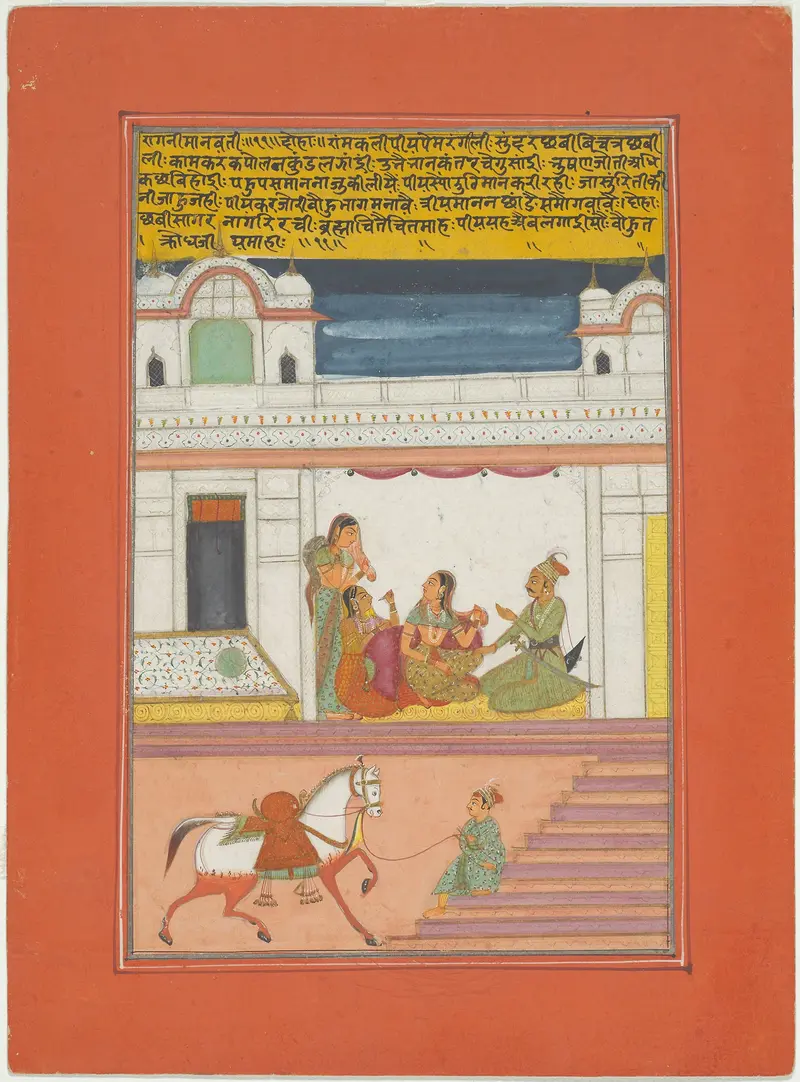
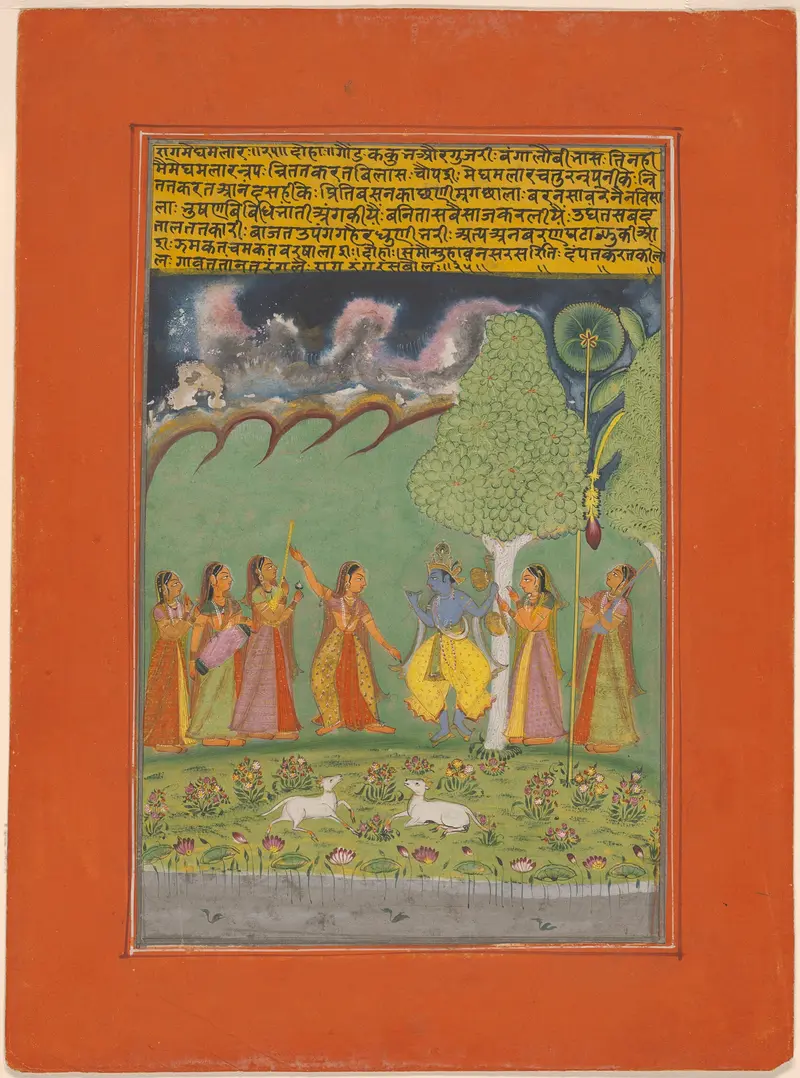
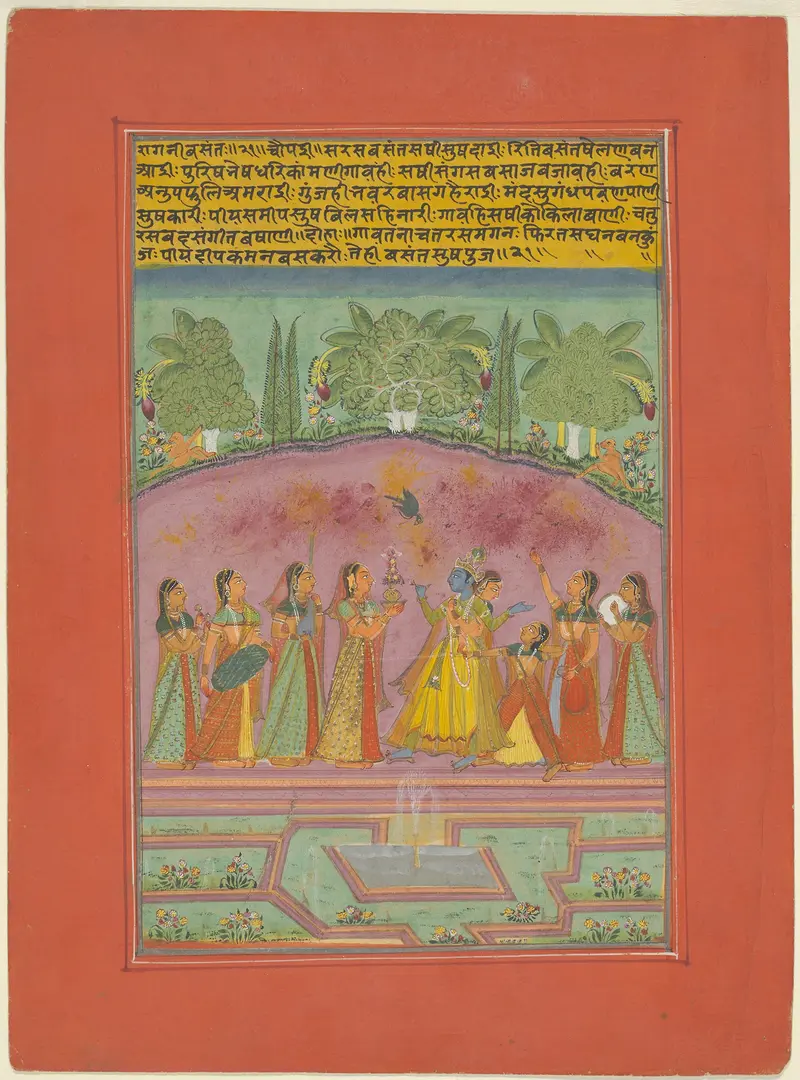
| Subjects | Persian epics and poems in illuminated books | Histories of the emperors, portraits, animals and flowers | Krishna and Radha, Hindu epics, musical modes (ragamala), court life and hunts |
| Look | Many figures layered up the page, fine detail, flowing line | Minute detail, lifelike faces, depth and decorated album borders | Bold, bright color, stylized figures, ornamental landscapes |
| Famous example | Sultan Muhammad, The Court of Gayumars | Abu’l Hasan, Emperor Jahangir Embraces Shah Abbas | Pages of the Jaipur Ragamala |
| Key artists | Behzad, Sultan Muhammad, Riza-yi ‘Abbasi | Basawan, Mansur, Abu’l Hasan, Govardhan | Nainsukh, Chokha |
List of famous Mughal paintings and their artists
The famous Mughal paintings: who made them, when, and where each one is today.
Show the listHide the list
| Painting | Painted by | Year | Medium | Size | Located in | City |
|---|---|---|---|---|---|---|
| Baburnama: Kichik Beg Wounded during Babur's Attack on Qalat | Kanha and Mansur | c. 1590 | Opaque watercolor and gold on paper | 23.9 × 12.9 cm (9.4 × 5.1 in) | Art Institute of Chicago | Chicago |
| Akbarnama: The Young Emperor Akbar Arrests the Insolent Shah Abu’l-Maali | Basawan and Shankar | c. 1590–95 | Opaque watercolor and gold on paper | 32 × 19.3 cm (12.6 × 7.6 in) | Art Institute of Chicago | Chicago |
| Hamzanama: Umar Defeats a Dragon | Daswanth and Tara (attributed) | c. 1570 | Opaque watercolor on cotton and paper | 70 × 55 cm (27.6 × 21.7 in) | MAK – Museum of Applied Arts | Vienna |
| Razmnama: Arjuna Slays Karna | Fazl | c. 1616–17 | Opaque watercolor and gold on paper | 34.3 × 24.2 cm (13.5 × 9.5 in) | Art Institute of Chicago | Chicago |
| Padshahnama: A Procession Scene with Musicians | Unknown Mughal artist | c. 1650 | Opaque watercolor and gold on paper | 38 × 25.9 cm (15 × 10.2 in) | Art Institute of Chicago | Chicago |
| Emperor Jahangir Embraces Shah Abbas | Abu’l Hasan | c. 1618 | Opaque watercolor, ink, silver and gold on paper | 23.8 × 15.4 cm (9.4 × 6.1 in) | Freer Gallery of Art | Washington |
| Tarikh-i Alfi: Al-Mu’tazz Sends Gifts to Abdulla ibn Abdulla | Unknown Mughal artist | c. 1592–94 | Opaque watercolor and gold on paper | 39.9 × 22.6 cm (15.7 × 8.9 in) | Art Institute of Chicago | Chicago |
| Emperor Jahangir Triumphing over Poverty | Abu’l Hasan (attributed) | c. 1620–1625 | Opaque watercolor, gold and ink on paper | 36.8 × 24.6 cm (14.5 × 9.7 in) | LACMA | Los Angeles |
| Jahangir with a Portrait of Akbar | Hashim and Abu’l Hasan | c. 1600–15 | Ink, color and gold on paper | 29.7 × 24.4 cm (11.7 × 9.6 in) | Louvre Museum | Paris |
| Shah Jahan Album: Akbar with Lion and Calf | Govardhan | c. 1630 | Ink, opaque watercolor and gold on paper | 38.9 × 25.7 cm (15.3 × 10.1 in) | Metropolitan Museum of Art | New York |
Mughal painting: questions and answers
What does Mughal mean in art?
In art, Mughal means the painting, architecture and other arts made in northern and central India under the Mughal emperors, who ruled from 1526. The Getty's art vocabulary dates the Mughal style from the mid-16th to the late 17th century and names its hallmark as a mingling of Persian and indigenous Indian influence. Mughal painting itself is best known for small, finely detailed pictures made for illustrated books and albums, and it went on into the 1700s in cities such as Lucknow and Murshidabad.
Sources: Getty AAT: Mughal · Cleveland Museum of Art: Posthumous portrait of Muhammad Shah · Victoria and Albert Museum: Dip Chand, William Fullerton
What are the characteristics of Mughal miniature painting?
Mughal miniatures are small, minutely detailed pictures in opaque watercolor and gold on paper, made as pages of books and albums. Typical features are lifelike portraits, often in profile; close studies of animals, birds and flowers; crowded history scenes in which tiny inscriptions name the people; and wide decorated borders. The Cleveland Museum of Art describes the mature style of the 1590s as dynamic in composition but organized in space, with a new naturalism and three-dimensionality, and the V&A sees European conventions such as perspective and hovering cherubs fully absorbed by about 1630.
Sources: Cleveland Museum of Art: Basavana and Sur Das, The siege of Arbela · Victoria and Albert Museum: Bichitr, Asaf Khan · Victoria and Albert Museum: The emperor Alamgir (Aurangzeb) · Victoria and Albert Museum: Manohar, Jahangir in a garden
When did Mughal painting start and end?
Mughal painting began in the mid-1500s and lasted into the 1700s. Akbar's father Humayun brought Persian painters to India, and Akbar's workshop began its first major project, the Hamzanama, in about 1562. Painting was at its most refined under Jahangir and Shah Jahan, whose reign ended in 1658. His son Aurangzeb later turned away from opulence and spent decades at war in the Deccan, which weakened the empire, the V&A says; in the 1700s Mughal-style painting carried on in Lucknow and Murshidabad, sometimes for British officials of the East India Company.
Sources: Victoria and Albert Museum: Hamzanama page (Hamza killing a lion) · Cleveland Museum of Art: Abd al-Samad, Hunting with falcons · Cleveland Museum of Art: Hashim, Shah Jahan, from the Late Shah Jahan Album · Victoria and Albert Museum: The emperor Alamgir (Aurangzeb) · Cleveland Museum of Art: Posthumous portrait of Muhammad Shah · Victoria and Albert Museum: Dip Chand, William Fullerton
Which two traditions did Mughal painting combine?
Mughal painting combined Persian and Indian painting, and soon took in ideas from European art as well. The Cleveland Museum of Art describes Akbar's early Tuti-nama, of about 1560, as a book on which Indian artists worked with Persian masters to form a new style: its bright red background and composition are Indian, its delicate drawing is Persian. Mir Sayyid Ali, the first head of Akbar's workshop, trained Indian artists in Persian ways, and by the 1580s a new depth and naturalism appeared, possibly inspired by European prints and paintings.
Sources: Cleveland Museum of Art: Tuti-nama page · Cleveland Museum of Art: first Tuti-nama illustration · Cleveland Museum of Art: Portrait of a kneeling holy man · Cleveland Museum of Art: A mendicant bowing before a holy man
Under which emperor did Mughal painting reach its zenith?
Mughal painting reached its zenith under three emperors in turn. Under Akbar (reigned 1556–1605) the imperial workshop was founded, and by the 1590s its painting had reached maturity, says the Cleveland Museum of Art. Jahangir (1605–27) prized portraits and studies of nature and gave Mansur the title Wonder of the Age, an honor only Abu’l Hasan shared, the V&A notes. Under Shah Jahan (1628–58), Cleveland says, imperial Mughal painting reached a pinnacle of refinement and formality.
Sources: Cleveland Museum of Art: Basavana and Sur Das, The siege of Arbela · Cleveland Museum of Art: Govardhan, A Courtier, Possibly Khan Alam · Victoria and Albert Museum: Mansur, Turkey cock · Victoria and Albert Museum: Mansur, Himalayan Cheer Pheasant · Cleveland Museum of Art: Hashim, Shah Jahan, from the Late Shah Jahan Album
What was Mughal painting like under Akbar?
Under Akbar, Mughal painting meant large illustrated books, made by teams. His workshop illustrated the Hamzanama, with about 1,400 paintings on cotton, the Tuti-nama, Persian translations of Babur's memoirs and of the Mahabharata (the Razmnama), the Thousand-Year History and his own chronicle, the Akbarnama. One artist often designed a page and another painted it, and their names were written in red ink below. The Art Institute of Chicago counts about fifty artists at work on the Akbarnama.
Sources: Victoria and Albert Museum: Hamzanama page (Hamza and Hura the genie) · Cleveland Museum of Art: Tuti-nama (Tales of a Parrot) · Victoria and Albert Museum: Baburnama page (Babur's Garden of Fidelity) · Victoria and Albert Museum: Razmnama page · Cleveland Museum of Art: Page of disasters, from the Tarikh-i Alfi · Victoria and Albert Museum: Akbarnama page (Akbar hunting with cheetahs) · Art Institute of Chicago: Akbarnama page
What was Mughal painting like under Jahangir?
Under Jahangir (reigned 1605–27), painters made more single portraits, court scenes and studies of nature, many of them for albums. When rare animals reached the court, Jahangir had them described and painted: Mansur painted a turkey that arrived in 1612 and a zebra presented in 1621, the V&A says. In his troubled last years, LACMA explains, the emperor commissioned allegorical portraits that proclaim his justice and power, such as Emperor Jahangir Triumphing over Poverty, attributed to Abu’l Hasan, in which he shoots arrows at the figure of poverty.
Sources: Cleveland Museum of Art: Govardhan, A Courtier, Possibly Khan Alam · Victoria and Albert Museum: Nanha, Maharana of Mewar and Prince Khurram · Victoria and Albert Museum: Mansur, Turkey cock · Victoria and Albert Museum: Mansur, A zebra · LACMA: Emperor Jahangir Triumphing Over Poverty · Freer Gallery of Art (Google Arts & Culture)
Who are the famous Mughal painters?
The best-known Mughal painters include Daswanth and Basawan under Akbar; Mansur, Abu’l Hasan and Manohar under Jahangir; and Bichitr, Govardhan, Hashim, Payag and Balchand under Shah Jahan. Cleveland's Tuti-nama of about 1560 has pages by Daswanth, and the Art Institute of Chicago calls Basawan one of the leading painters of Akbar's studio. The V&A says only Mansur and Abu’l Hasan were honored with titles such as Wonder of the Age, and that Manohar, Basawan's son, painted some of the best-known portraits of Jahangir's reign. Harvard calls Payag, Balchand's brother, a master of historical narrative painting.
Sources: Cleveland Museum of Art: Dasavanta, Tuti-nama page · Art Institute of Chicago: Akbarnama page · Victoria and Albert Museum: Mansur, Himalayan Cheer Pheasant · Victoria and Albert Museum: Manohar, Jahangir in a garden · Victoria and Albert Museum: Bichitr, Asaf Khan · Cleveland Museum of Art: Hashim, Shah Jahan · Victoria and Albert Museum: Balchand, Mirza Abu'l Hasan · Harvard Art Museums: Payag, The Battle of Samugarh
What is the Hamzanama?
The Hamzanama, or Book of Hamza, is the giant illustrated book of the adventures of Hamza that Akbar commissioned soon after he came to the throne. It was the first major project of the royal painting workshop, directed by the Iranian masters Mir Sayyid Ali and Abd al-Samad, and took about fifteen years, probably until 1577. Its 14 volumes held some 1,400 large paintings on cotton, and only about 200 survive. The MAK in Vienna holds 60, the largest group, among them Umar Defeats a Dragon; the V&A has 24.
Sources: Victoria and Albert Museum: Hamzanama page (Hamza killing a lion) · Victoria and Albert Museum: Hamzanama page (Hamza and Hura the genie) · MAK – Museum of Applied Arts, Vienna: Hamzanama (BI 8770) · MAK – Museum of Applied Arts, Vienna: Umar defeats a dragon (BI 8770-15)
What is the Akbarnama?
The Akbarnama, or Book of Akbar, is the official history of Akbar's reign, written in Persian by his court historian Abu’l Fazl between 1590 and 1596. Akbar's artists illustrated it as it was being written: the V&A's copy, thought to be the first illustrated one, was painted by at least 49 artists, whose names appear in red ink beneath the pictures. A later copy was finished shortly before Akbar died in 1605; pages of it are in the Cleveland Museum of Art.
Sources: Victoria and Albert Museum: Akbarnama page (Akbar hunting with cheetahs) · Victoria and Albert Museum: Akbarnama page (building Fatehpur Sikri) · Art Institute of Chicago: Akbarnama page · Cleveland Museum of Art: Akbar-nama page (circumcision ceremony at Fatehpur Sikri)
What is the difference between Mughal and Rajput painting?
Mughal painting was made for the Muslim Mughal emperors and their nobles, Rajput painting for the Hindu Rajput kings of Rajasthan. Mughal painters favored histories, true-to-life portraits and studies of nature; Rajput painters favored Krishna legends, Hindu epics and ragamala series, which picture musical modes. The two met often: Rajput kingdoms such as Marwar lived under the Mughal empire and married into its family, and the same drawings served as models for portraits of Mughal and Rajput royalty, the Cleveland Museum of Art says. The Getty calls the painting of Ajmer in Rajasthan an extension of the Mughal style.
Sources: Cleveland Museum of Art: Portrait of Suraj Singh Rathor · Cleveland Museum of Art: Portrait of Maharaja Rai Singh of Bikaner · Getty AAT: Ajmer (Mughal style in Rajasthan) · Art Institute of Chicago: Maharana Bhim Singh in Procession
Where can you see Mughal paintings?
Famous Mughal paintings are in the V&A in London, the MAK in Vienna, the Chester Beatty Library in Dublin, the Freer Gallery of Art in Washington, the Metropolitan Museum of Art in New York and the Cleveland Museum of Art. The V&A holds what is thought to be the first illustrated copy of the Akbarnama and Mansur's zebra; the MAK has the largest group of Hamzanama pages; the Freer has allegorical portraits of Jahangir; the Met has pages of the Shah Jahan Album; Cleveland has Akbar's Tuti-nama. The illustrated Padshahnama is in the Royal Collection at Windsor Castle.
Sources: Victoria and Albert Museum: Akbarnama page (Akbar hunting with cheetahs) · Victoria and Albert Museum: Mansur, A zebra · MAK – Museum of Applied Arts, Vienna: Hamzanama (BI 8770) · Freer Gallery of Art (Google Arts & Culture) · LACMA: Emperor Jahangir Triumphing Over Poverty · The Met: Akbar With Lion and Calf · Cleveland Museum of Art: Tuti-nama (Tales of a Parrot) · Victoria and Albert Museum: Nanha, Maharana of Mewar and Prince Khurram
Did Rembrandt copy Mughal paintings?
Yes. Late in his career, about 1656–61, Rembrandt made a series of unusually careful drawings of Mughal emperors and courtiers, studies of imperial Mughal portraits, the J. Paul Getty Museum says; its exhibition Rembrandt and the Inspiration of India showed them beside Mughal paintings with similar compositions, such as Manohar's Prince Daniyal from the Shah Jahan Album. Two of Rembrandt's Mughal drawings are in our collection: Shah Jahan and Shah Jahan and Dara Shikoh.
Sources: J. Paul Getty Museum: Rembrandt and the Inspiration of India
Is Mughal art in the public domain, and can I download it free?
Yes. Mughal paintings were made between the 1550s and the 1800s, so they are in the public domain in the United States and in countries where copyright ends 70 years after the artist's death. You can download them free and use them for anything, including commercial projects. A few countries have their own rules on photographs of artworks, so check them if you publish outside the U.S.
Sources: Cornell University Library: Copyright Term and the Public Domain
How we chose the famous paintings
The famous paintings on this page are the Mughal paintings in our collection known most widely around the world, measured by the number of languages that have an encyclopedia entry about each one, checked in November 2026. Most Mughal paintings were made as pages of illustrated books and albums, so a book counts once, by the entries about the book, and we show one of its pages: Daswanth's Umar Defeats a Dragon, for example, stands for the Hamzanama. Three portraits of Jahangir are counted by entries of their own; where a painting and a book tie, the painting comes first. We list only works known in at least two languages, and no painter has more than three.
We include works made for the Mughal court and its nobles. The Rajput, Persian and European pictures that also sit in our Mughal collection are left out; Persian painting has its place on our Islamic art page. Famous Mughal works that we do not hold yet, such as The Death of Inayat Khan, Jahangir Preferring a Sufi Shaikh to Kings and Jahangir Entertains Shah Abbas, are missing too.
Dates, sizes and locations come from the museums' own records and from Wikidata.
Spotted a mistake? Tell us and we will correct it.